Introduction
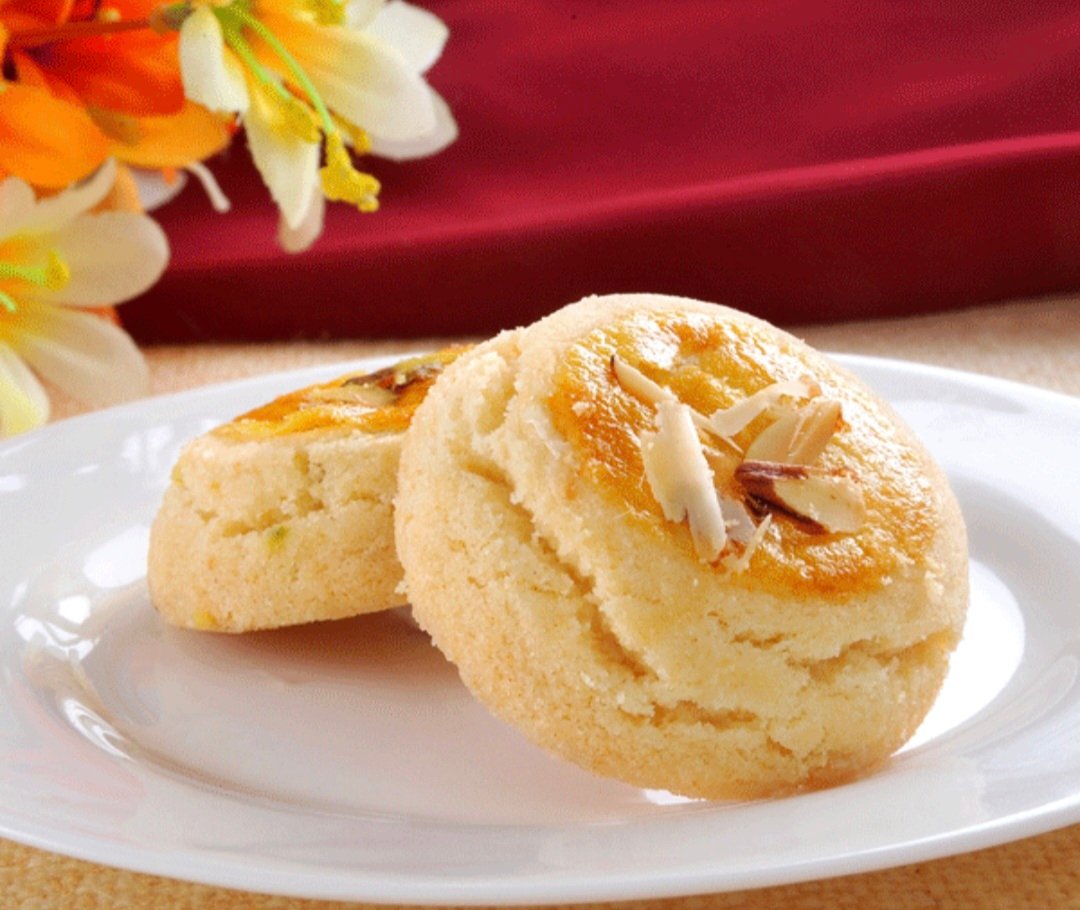
Pakistani bakery-style nankhatai cookies are traditional, melt-in-the-mouth biscuits known for their rich buttery flavor, delicate crumb, and lightly crisp exterior. These classic cookies are commonly enjoyed with doodh patti, chai, or a warm cup of milk. Their simple ingredients and distinctive aroma make them a favorite in many Pakistani homes, especially during family gatherings, Eid celebrations, winter evenings, and afternoon tea.
If you have ever purchased nankhatai from a local bakery and wondered how to recreate the same taste at home, this recipe will help you understand the process. Homemade nankhatai can be prepared with flour, ghee or butter, powdered sugar, and a few basic pantry ingredients. You can also add cardamom, almonds, pistachios, or a little semolina to create different textures and flavors.
The traditional recipe is particularly appealing because it does not require complicated decorating techniques. The dough is shaped into small rounds, gently flattened, and baked until the cookies develop a pale golden color. When prepared correctly, nankhatai should be tender and crumbly rather than hard or chewy.
This detailed guide explains how to prepare authentic Pakistani bakery-style nankhatai, choose the right ingredients, achieve the characteristic texture, troubleshoot common problems, and store the cookies so they remain delicious for longer.
What Is Nankhatai?
Nankhatai is a traditional South Asian shortbread-style biscuit associated with Pakistan and India. It is particularly popular in Pakistani bakeries, where it is often sold alongside butter biscuits, coconut biscuits, rusks, and other tea-time treats.
The name is commonly associated with the words naan, referring to bread, and khatai, a term linked with a biscuit or sweet baked preparation. The exact historical development of the name and recipe is more complex than a single definition, but nankhatai is now widely recognized as a traditional shortbread-style cookie.
Unlike many modern cookies that depend on eggs, chocolate, or elaborate fillings, nankhatai is appreciated for its simplicity. Its flavor comes mainly from the fat, sugar, flour, and aromatic ingredients used in the dough.
Traditional and regional recipes differ. Some use wheat flour, some use chickpea flour, and others combine all-purpose flour with semolina or other flours. Ghee is popular for its characteristic aroma, while butter produces a familiar buttery taste.
Pakistani bakery-style nankhatai often has these qualities:
- A delicate, crumbly texture.
- A rich buttery or ghee aroma.
- Mild sweetness.
- A lightly golden underside.
- A pale surface with small cracks.
- A subtle cardamom flavor in many versions.
- Optional almond or pistachio decoration.
The recipe below is designed for home cooks who want a reliable, easy-to-follow version with a texture similar to classic bakery nankhatai.
Why You Will Love This Nankhatai Recipe
1. Simple Ingredients
You can make nankhatai with everyday ingredients available in most Pakistani grocery stores. There is no need for expensive equipment or complicated ingredients.
2. Bakery-Style Flavor
Using ghee or butter, powdered sugar, and cardamom creates the rich aroma associated with traditional nankhatai.
3. No Eggs Required
This recipe does not need eggs. The fat helps bind the dough, while careful mixing creates the characteristic shortbread-like texture.
4. Perfect With Pakistani Chai
Nankhatai pairs wonderfully with doodh patti, green tea, black tea, and coffee. Its sweetness complements the slightly bitter flavor of tea.
5. Easy to Customize
You can add almonds, pistachios, semolina, chickpea flour, or a small amount of nutmeg to adjust the flavor and texture.
6. Suitable for Beginners
The recipe involves mixing, shaping, and baking. Once you understand the consistency of the dough, the process becomes straightforward.
7. Great for Homemade Gifts
Cooled nankhatai can be packed in a food-safe tin or box and shared with family and friends.
Recipe Overview
| Recipe detail | Information |
|---|---|
| Preparation time | 20 minutes |
| Chilling time | 15–20 minutes, optional |
| Baking time | 15–22 minutes |
| Cooling time | 20–30 minutes |
| Total time | Approximately 55–75 minutes |
| Yield | 18–22 cookies |
| Difficulty | Easy |
| Cuisine | Pakistani and South Asian-inspired |
| Main flavor | Buttery and cardamom |
| Texture | Crumbly and tender |
Actual baking time depends on cookie size, oven performance, and the baking tray you use.
Ingredients for Pakistani Bakery-Style Nankhatai
This recipe makes approximately 18–22 small cookies.
Main Ingredients
1. All-purpose flour — 1 cup (125 grams)
All-purpose flour provides structure and helps the cookies hold their shape. For consistent results, weigh the flour if possible. If measuring by cup, spoon it into the cup and level the top rather than pressing it down firmly.
2. Ghee or unsalted butter — 1/2 cup (approximately 100–113 grams, depending on the product)
Ghee is an excellent choice for traditional Pakistani-style flavor. It gives nankhatai a distinctive aroma and a delicate texture.
Unsalted butter is another good option. It produces a familiar buttery flavor, although the finished cookies may differ slightly in texture because butter contains water while ghee is predominantly fat.
Use softened, pliable fat rather than hot or fully melted fat.
3. Powdered sugar — 1/2 cup (approximately 55–65 grams)
Powdered sugar blends smoothly into the fat and helps create a delicate crumb.
The exact weight depends on how finely the sugar is ground and whether it contains starch. Measuring by weight is the most reliable approach.
4. Baking powder — 1/4 teaspoon
A small amount of baking powder helps give the cookies a gentle lift. Too much may make the cookies rise excessively or develop an unpleasant aftertaste.
5. Ground cardamom — 1/4 teaspoon
Cardamom provides the warm, fragrant flavor often associated with traditional nankhatai.
Freshly ground cardamom usually gives a stronger aroma than older pre-ground spice.
6. Salt — a small pinch
Salt balances the sweetness and enhances the buttery flavor. If using salted butter, reduce or omit the additional salt.
Optional Ingredients
Semolina — 1 tablespoon
Fine semolina can add a slightly grainier, crisp texture. It is optional, and the amount of flour should be adjusted if you add extra dry ingredients.
Chickpea flour — 1–2 tablespoons
Chickpea flour, also called besan, adds a nutty flavor. For a reliable first batch, replace part of the all-purpose flour rather than adding a large quantity on top.
Chopped almonds — 2 tablespoons
Almonds add crunch and make the cookies look attractive.
Chopped pistachios — 1 tablespoon
Pistachios provide color and a mild nutty flavor.
Nutmeg — a tiny pinch
Nutmeg complements cardamom, but use very little so it does not overpower the cookies.
Milk — up to 1 teaspoon, only if necessary
Most versions of this dough should come together without much additional liquid. Add milk only if the dough remains too dry to hold together after proper mixing.
Equipment You Need
Prepare the following equipment before starting:
- A mixing bowl.
- A kitchen scale or measuring cups.
- A spoon or spatula.
- A baking tray.
- Baking parchment, if suitable for your oven.
- A wire cooling rack.
- A small bowl for optional nuts.
- An oven thermometer, if available.
A kitchen scale is especially helpful because the ratio of flour to fat affects the texture significantly.
Step-by-Step Instructions for Making Nankhatai
Step 1: Prepare the Ingredients
Measure all ingredients before mixing.
Allow the ghee or butter to become soft and pliable. It should be easy to mix but should not be hot or liquid.
If using butter, let it soften at room temperature. If using ghee, make sure it is not warm enough to turn the dough oily.
Sift the flour, powdered sugar, and baking powder if they contain lumps.
Finely grind the cardamom seeds if you are using whole cardamom pods.
Step 2: Preheat the Oven
Preheat your oven to 160°C (320°F).
A moderately low temperature helps the cookies cook through without becoming too dark.
Line a baking tray with parchment paper, following the instructions for your baking equipment. If parchment is not suitable for your setup, use a tray prepared according to its manufacturer’s recommendations.
Do not grease the tray excessively, because too much additional fat can encourage spreading.
Step 3: Cream the Ghee or Butter With Sugar
Place the ghee or softened butter in a mixing bowl.
Add the powdered sugar and mix until the ingredients become smooth and creamy.
You do not need to whip the mixture as extensively as you would for some cakes. The goal is to distribute the sugar evenly and create a smooth base.
If the fat becomes warm and greasy, pause and cool the mixture slightly before continuing.
Important: The consistency of the fat matters. Very warm fat can make the cookies spread excessively, while fat that is too firm can make the dough difficult to mix.
Step 4: Add the Cardamom and Salt
Add the ground cardamom and a small pinch of salt.
Mix gently until the aroma is evenly distributed.
If you prefer a more traditional flavor, keep the cardamom noticeable but not overpowering.
At this point, the mixture should smell buttery and fragrant.
Step 5: Combine the Dry Ingredients
In a separate bowl, combine the all-purpose flour and baking powder.
If using fine semolina or chickpea flour, include the planned quantity and adjust the total flour blend accordingly.
Mix the dry ingredients thoroughly so the baking powder is distributed evenly.
This step helps prevent inconsistent texture from one cookie to another.
Step 6: Add the Flour Mixture Gradually
Add the dry ingredients to the creamed fat and sugar in two or three additions.
Mix gently with a spatula or your fingertips.
At first, the mixture may look like crumbs. Continue pressing it together gently until it begins to form a soft dough.
Avoid vigorous kneading. Excessive handling is unnecessary and may affect the texture.
The dough should be soft enough to shape but firm enough to hold a round form.
Step 7: Check the Dough Consistency
Take a small portion of dough and press it between your fingers.
If it holds together without crumbling apart, it is ready to shape.
If it is very dry and breaks immediately, check whether the flour was measured accurately. If necessary, add a few drops of milk or a small amount of softened fat, then mix again.
If it is oily, sticky, or difficult to shape, chill it for 10–15 minutes.
Do not add a large quantity of flour immediately to fix oily dough. Excess flour may make the cookies dry and hard.
Step 8: Rest or Chill the Dough
Cover the dough and allow it to rest for approximately 10 minutes.
If the kitchen is warm, or the dough feels greasy, refrigerate it for 15–20 minutes.
Chilling helps the fat firm up and can make shaping easier.
However, do not chill the dough until it becomes extremely hard. If it is difficult to shape, let it soften slightly at room temperature.
Step 9: Divide the Dough
Divide the dough into 18–22 small portions.
For a consistent batch, weigh each portion if possible. A small cookie weighing approximately 12–15 grams is a useful starting point, depending on the desired size and the total amount of dough.
Roll each portion gently between your palms to form a smooth ball.
Avoid squeezing the dough too firmly.
Step 10: Shape the Cookies
Place each dough ball on the prepared baking tray.
Flatten each ball very slightly with your fingers. Nankhatai is generally thicker than a thin, crisp biscuit, so do not press the dough into a flat disc.
Leave approximately 4–5 centimeters between cookies, allowing room for modest spreading.
For a classic bakery appearance, use your thumb or the back of a small spoon to create a shallow indentation in the center.
You can also leave the tops smooth if you prefer a simpler shape.
Step 11: Add the Toppings
If desired, place a small piece of almond or a few pistachio pieces on top of each cookie.
Press the garnish gently into the dough so it stays in place during baking.
Avoid adding too many toppings, especially large pieces that may fall off when the cookies are handled.
Step 12: Bake the Nankhatai
Place the tray on the middle rack of the preheated oven.
Bake at 160°C (320°F) for approximately 15–22 minutes.
Begin checking at around 15 minutes, particularly if the cookies are small.
Nankhatai should not become deeply brown on top. Look for cookies that have set around the edges and show a pale golden underside.
The tops may remain relatively light, which is normal.
If your oven has hot spots, rotate the tray carefully near the end of baking, provided doing so is safe for your oven and does not cause the cookies to collapse.
Step 13: Check for Doneness
Look at the underside of one cookie using a suitable spatula.
It should be lightly golden rather than dark brown or burnt.
The cookies may feel soft when hot. Do not assume they are undercooked simply because they are not firm immediately after leaving the oven.
If the underside is still very pale and the cookies appear unset, continue baking for a few minutes and check again.
Step 14: Let the Cookies Cool on the Tray
Remove the tray from the oven and place it on a heat-safe surface.
Allow the cookies to cool on the tray for approximately 10–15 minutes.
Nankhatai is delicate when hot and can break easily if moved too soon.
As the cookies cool, the fat firms up and the crumb becomes more stable.
Step 15: Transfer to a Cooling Rack
Once the cookies are firm enough to handle, transfer them carefully to a wire rack.
Let them cool completely before serving or storing.
This cooling stage is essential for achieving the correct texture. Hot nankhatai may feel fragile, but properly cooled cookies should hold together while remaining crumbly.
Step 16: Serve and Enjoy
Serve the cookies with Pakistani milk tea, green tea, coffee, or warm milk.
For a traditional presentation, arrange them on a plate with a cup of doodh patti.
Their buttery aroma, gentle sweetness, and cardamom flavor make them ideal for an everyday tea-time snack.
Secrets to Achieving Authentic Pakistani Bakery-Style Nankhatai
A few small details can make a noticeable difference in the final result.
Use the Correct Fat-to-Flour Ratio
The balance between flour and fat determines whether nankhatai is delicate or hard.
Too much flour can make the cookies dry and dense. Too much fat may cause excessive spreading and an oily texture.
Measure the ingredients accurately and avoid adding flour simply because the dough initially looks crumbly.
Avoid Overmixing
Nankhatai dough does not need vigorous kneading.
Once the ingredients come together, stop mixing. Gentle handling helps preserve the shortbread-like texture.
Keep the Cookies Fairly Thick
Very thin cookies may become crisp and hard rather than tender and crumbly.
Shape the dough into small, slightly flattened rounds rather than pressing it into thin discs.
Bake at a Moderate Temperature
A moderate temperature allows the cookies to cook gradually.
Very high heat may brown the bottoms before the centers are properly set.
Do Not Expect a Dark Brown Top
Traditional nankhatai often has a pale surface. The underside usually develops more color than the top.
Wait for the correct signs of doneness instead of baking until the entire cookie becomes dark brown.
Let the Cookies Cool Completely
Nankhatai is fragile when warm.
Allowing it to cool helps the structure stabilize and gives the texture time to develop.
Use Fresh, Aromatic Cardamom
Cardamom is a signature flavor in many traditional recipes.
Freshly ground seeds can provide a more pronounced aroma than old, pre-ground spice.
Choose Ghee for a Traditional Aroma
Ghee often gives nankhatai its recognizable South Asian bakery flavor.
Butter is an excellent alternative when you prefer a buttery taste or do not have ghee available.
Ghee vs. Butter: Which Is Better for Nankhatai?
Both ghee and butter can produce delicious cookies, but they have slightly different properties.
| Feature | Ghee | Butter |
|---|---|---|
| Flavor | Rich, nutty, traditional aroma | Creamy, familiar buttery flavor |
| Water content | Very low | Contains water |
| Dough texture | Often tender and crumbly | Can be slightly different in spread and texture |
| Aroma | Distinctive South Asian character | Classic bakery-style butter aroma |
| Handling | Should be cool and pliable | Best softened, not melted |
| Best for | Traditional-style flavor | A classic buttery variation |
When to Use Ghee
Choose ghee if you want a pronounced traditional aroma.
Ghee works especially well with cardamom and a small amount of chickpea flour.
When to Use Butter
Choose butter if you prefer a familiar buttery taste.
Unsalted butter gives you greater control over the salt level. Since butter contains water, the dough may behave differently from dough made with ghee.
Can You Use Both?
Yes. Combining ghee and butter can create a balanced flavor, but changing the fat ratio may affect the dough consistency.
For your first batch, use one fat source. Once you understand how the dough behaves, experiment with a combination.
Popular Nankhatai Variations
Nankhatai has many regional and household variations. You can modify the basic recipe according to your preferred flavor and texture.
1. Classic Pakistani Bakery Nankhatai
This version uses all-purpose flour, ghee or butter, powdered sugar, cardamom, and baking powder.
The goal is a pale, crumbly cookie with a rich aroma.
Keep the toppings simple or omit them entirely.
2. Almond Nankhatai
Add finely ground almonds to the dry ingredients, replacing a small portion of the flour rather than adding a large amount of extra dry material.
Almonds provide a delicate nutty flavor.
Decorate the cookies with sliced almonds before baking.
3. Pistachio Nankhatai
Use chopped pistachios as a topping.
For a stronger pistachio flavor, add a small quantity of finely ground pistachios to the dough.
Avoid using too many nuts, as this can make the cookies fragile.
4. Besan Nankhatai
Replace approximately 2 tablespoons of the all-purpose flour with chickpea flour.
Besan contributes a roasted, nutty flavor associated with some traditional variations.
Because chickpea flour absorbs moisture differently, check the dough consistency carefully.
5. Semolina Nankhatai
Replace a small portion of the flour with fine semolina.
Semolina can create a slightly grainier texture. Coarse semolina may make the cookies less delicate, so fine semolina is a better starting point.
6. Cardamom-Rich Nankhatai
Increase the cardamom slightly if you prefer a more aromatic cookie.
Start with an additional small pinch rather than doubling the quantity immediately.
7. Nutmeg Nankhatai
Add a tiny pinch of ground nutmeg.
Nutmeg complements the butter and cardamom but should remain subtle.
8. Coconut Nankhatai
Add a small quantity of finely desiccated coconut.
Coconut changes the moisture balance and texture, so avoid adding too much. You may need to adjust the flour or fat slightly.
9. Whole Wheat Nankhatai
Replace part of the all-purpose flour with whole wheat flour.
Whole wheat flour provides a stronger grain flavor and may create a denser texture. Begin by replacing only one-quarter of the flour and assess the result.
10. Less-Sweet Nankhatai
Reduce the powdered sugar modestly if you prefer less sweetness.
Remember that sugar contributes to texture as well as taste. Large reductions can make the cookies less delicate.
11. Saffron Nankhatai
Add a few strands of saffron that have been gently crushed.
Use a small amount so the aroma complements rather than overwhelms the cardamom.
12. Chocolate Nankhatai
Add a small quantity of cocoa powder, replacing part of the flour.
Cocoa absorbs moisture and changes the flavor, so the dough may need adjustment. For a first experiment, replace only a small amount of flour.
13. Rose-Flavored Nankhatai
Use a tiny amount of food-grade rose water.
Too much liquid can change the dough consistency, and excessive rose flavor can overpower the buttery aroma.
14. Mixed-Nut Nankhatai
Combine small quantities of finely chopped almonds and pistachios.
Keep the total quantity modest so the cookies retain their characteristic crumbly structure.
How to Make Nankhatai Without Eggs
This recipe is already egg-free.
Traditional shortbread-style nankhatai does not necessarily require eggs because the fat and flour form the structure.
To make the dough successfully without eggs:
- Cream the ghee or softened butter with powdered sugar.
- Add cardamom and salt.
- Mix the flour with baking powder.
- Add the dry ingredients gradually.
- Bring the mixture together gently.
- Shape the dough into small rounds.
- Bake until the undersides are lightly golden.
- Cool before handling.
Do not add an egg simply because the dough looks crumbly. First, press the dough together and check whether the fat is properly distributed.
If the dough truly needs additional moisture, use only a few drops of milk at a time.
Can You Make Nankhatai Without an Oven?
Yes, but the method requires more attention to heat control.
A suitable stovetop baking setup can be used if your cookware permits dry stovetop baking. A heavy-bottomed pot with a heat-safe rack and lid can provide indirect heat.
However, the results may differ from conventional oven baking.
General Stovetop Approach
- Place a stable, heat-safe rack inside a heavy-bottomed pot.
- Set up the cookware according to its manufacturer’s instructions.
- Warm it gently if appropriate for that cookware.
- Arrange the shaped cookies on a heat-safe tray.
- Place the tray on the rack so it does not touch the pot’s base.
- Cover with the lid and cook over low heat.
- Check the cookies carefully at intervals.
- Remove them once set and allow them to cool completely.
The cooking time will depend on the pot, tray, stove, and cookie thickness.
Important: Do not use a dry-baking method in a pressure cooker unless the manufacturer explicitly permits it. Do not improvise with plastic materials or cookware that is not designed for high heat.
For the most consistent traditional texture, an ordinary oven is generally easier to control.
Common Nankhatai Problems and How to Fix Them
Problem 1: Nankhatai Spreads Too Much
Possible causes:
- The fat was too warm.
- The dough contained too much fat.
- The dough was too soft.
- The oven temperature was too low for the particular recipe and setup.
Solutions:
- Chill the dough briefly.
- Measure the fat accurately.
- Avoid using melted ghee or butter.
- Check your oven temperature.
- Bake a small test batch before shaping the entire quantity.
Problem 2: Nankhatai Becomes Hard
Possible causes:
- Too much flour.
- Excessive mixing.
- Overbaking.
- Cookies that are too thin.
Solutions:
- Measure the flour by weight.
- Mix only until the dough comes together.
- Check the underside near the end of baking.
- Keep the cookies slightly thick.
Problem 3: Nankhatai Crumbles Before Baking
Possible causes:
- The fat was not distributed evenly.
- The dough is too dry.
- The flour quantity was too high.
Solutions:
- Press the dough together gently.
- Add a few drops of milk if necessary.
- Check your measurements before adding more ingredients.
- Allow the dough to rest briefly.
A crumbly texture after baking is desirable, but the raw dough must still hold together well enough to shape.
Problem 4: Nankhatai Is Oily
Possible causes:
- Too much ghee or butter.
- Fat that was too warm.
- Incorrect flour measurements.
Solutions:
- Chill the dough for 10–15 minutes.
- Recheck the flour and fat quantities.
- Avoid adding large amounts of flour to compensate for warm fat.
Problem 5: The Cookies Crack Too Much
Some cracking is normal and often desirable in nankhatai.
However, excessive cracking can indicate a dough that is too dry or cookies that have been shaped too aggressively.
Solutions:
- Check the dough consistency.
- Shape the portions gently.
- Add a few drops of milk if the dough breaks apart before baking.
Problem 6: The Undersides Burn
Possible causes:
- The oven temperature is too high.
- The baking tray is too close to the lower heating element.
- The tray is thin and transfers heat too quickly.
Solutions:
- Check the oven temperature.
- Use the middle rack.
- Use a suitable baking tray.
- Shorten the baking time if necessary.
Problem 7: The Cookies Remain Pale and Soft
Nankhatai does not need a deeply browned top, so pale color alone is not a problem.
However, if the cookies are still unset after cooling, they may need slightly more baking.
Solutions:
- Check the underside for a light golden color.
- Confirm that the oven was properly preheated.
- Bake for a few additional minutes if necessary.
- Allow the cookies to cool completely before assessing their texture.
Problem 8: The Cookies Taste Too Sweet
Possible causes:
- Too much powdered sugar.
- Sweet toppings.
- A personal preference for less-sweet biscuits.
Solutions:
- Measure the sugar accurately.
- Reduce it modestly in the next batch.
- Use unsweetened toppings such as plain almonds or pistachios.
Problem 9: The Cardamom Flavor Is Too Strong
Possible causes:
- Too much ground cardamom.
- Strongly aromatic, freshly ground seeds used in a larger quantity than expected.
Solutions:
- Begin with 1/4 teaspoon.
- Increase gradually in later batches.
- Avoid combining several strong spices until you understand their flavors.
Problem 10: The Cookies Break During Storage
Possible causes:
- They were packed while warm.
- They were handled before cooling.
- They were stacked too high.
- The container was moved roughly.
Solutions:
- Cool the cookies completely.
- Use a sturdy container.
- Place parchment between layers if necessary.
- Handle them gently.
How to Store Homemade Nankhatai
Correct storage helps maintain the flavor and texture of your cookies.
Store at Room Temperature
Let the cookies cool completely before placing them in an airtight container.
Keep the container in a cool, dry place away from direct sunlight and steam.
For best quality, enjoy homemade nankhatai within approximately 7–10 days. This is a quality guideline rather than a guaranteed shelf life; actual keeping time depends on preparation, ingredient quality, moisture, and storage conditions.
Avoid Storing Warm Cookies
Warm cookies release moisture into a closed container.
That moisture can soften the crumb and affect the texture.
Always allow the cookies to cool completely before packing.
Keep Them Away From Humidity
In warm or humid weather, nankhatai can lose its delicate texture more quickly.
Use a well-sealed container and keep it away from sinks, cooking steam, and other sources of moisture.
Can You Refrigerate Nankhatai?
Refrigeration is usually unnecessary for plain, fully baked nankhatai.
A refrigerator can expose the cookies to moisture and odors, potentially affecting their quality.
If you need to refrigerate them for a particular reason, use an airtight container and allow them to return to room temperature while protected from condensation.
Can You Freeze Nankhatai?
Yes. Fully cooled cookies can be frozen in a freezer-safe container.
Separate the layers with parchment paper to reduce breakage.
For best quality, use them within approximately 2 months. Thaw them while protected from condensation and let them return to room temperature before serving.
You can also freeze shaped, unbaked dough portions. Arrange them in a single layer until firm, then transfer them to a sealed freezer-safe container.
Thaw the dough in the refrigerator before baking, and check its consistency before placing it in the oven.
Serving Ideas for Pakistani Nankhatai
With Doodh Patti
Doodh patti is one of the most popular companions for nankhatai.
The creamy tea balances the buttery cookie and makes a satisfying afternoon snack.
With Green Tea
Green tea offers a lighter pairing, particularly if the cookies are moderately sweet.
With Black Tea
Plain black tea complements the richness of ghee and butter.
With Coffee
Serve nankhatai with brewed coffee or a cappuccino for a simple café-style snack at home.
With Warm Milk
Warm milk is a comforting option, especially during colder weather.
On an Eid Dessert Platter
Arrange nankhatai alongside other homemade sweets and biscuits.
Keep different textures separated where possible so delicate cookies are not crushed by heavier items.
As a Homemade Gift
Place cooled cookies in a clean, food-safe tin or box. Add a simple label listing the ingredients and common allergens, particularly if you plan to share them with friends or relatives.
Are Homemade Nankhatai Cookies Healthy?
Nankhatai is a sweet biscuit, so it is best enjoyed in moderation as part of a varied diet.
Its ingredients generally include flour, sugar, and ghee or butter. These contribute carbohydrates, added sugar, and fat.
Homemade preparation allows you to control the ingredients and portion size. You can experiment with whole wheat flour or a small quantity of nuts, although these changes will affect the texture and nutritional profile.
A homemade cookie is not automatically healthier than a commercial biscuit. The overall nutritional value depends on the recipe and serving size.
If you are monitoring sugar intake, saturated fat, or total calories, use measured portions and calculate nutrition based on the actual ingredients.
Approximate Nutritional Information
The following estimate assumes the recipe makes 20 cookies and uses the specified quantities of all-purpose flour, powdered sugar, and ghee or butter.
| Nutrient | Approximate amount per cookie |
|---|---|
| Calories | 75–90 kcal |
| Carbohydrates | 6–8 g |
| Fat | 5–7 g |
| Protein | About 1 g |
| Sugar | 3–4 g |
| Fiber | Less than 1 g |
These values are approximate and may change considerably with the type and quantity of fat, the weight of the powdered sugar, optional nuts, and the final number of cookies.
For more accurate information, calculate the nutritional values from the product labels and divide the total by the number of cookies produced.
Budget-Friendly Tips for Making Nankhatai at Home
Use Ingredients You Already Have
The basic recipe needs only a few ingredients.
You do not need almonds, pistachios, or special flavorings to make a delicious batch.
Buy Ghee According to Your Needs
Ghee gives the cookies a traditional aroma, but unsalted butter can be used instead.
Choose whichever option fits your taste and budget.
Measure Ingredients Carefully
Accurate measurements reduce waste and help prevent cookies from becoming hard or oily.
A kitchen scale is especially useful when preparing the recipe regularly.
Avoid Excessive Garnishes
Nuts and decorative toppings are optional.
A plain nankhatai can still look attractive and taste excellent.
Make a Test Batch
If you are trying a different brand of flour or ghee, bake two or three cookies first.
This helps you check the spreading, baking time, and flavor before committing the whole batch.
Use Leftover Dough Efficiently
Bring leftover dough together gently and shape it again.
Avoid repeatedly kneading the dough, which may change the final texture.
Frequently Asked Questions About Pakistani Bakery-Style Nankhatai
1. What makes nankhatai different from regular cookies?
Nankhatai is a traditional shortbread-style biscuit known for its buttery or ghee-rich flavor and delicate, crumbly texture. It often includes cardamom and usually does not require eggs.
2. Can I make nankhatai with butter instead of ghee?
Yes. Unsalted butter is a suitable alternative. The flavor and texture may differ slightly because butter contains water while ghee is predominantly fat.
3. Why is my nankhatai hard?
Hard cookies may result from excessive flour, overmixing, overbaking, or shaping the dough too thinly. Measure the ingredients carefully and bake only until the cookies are set with lightly golden undersides.
4. Why does nankhatai crumble so easily?
A delicate crumb is a characteristic feature of nankhatai. However, raw dough that falls apart during shaping may be too dry. Add a few drops of milk if necessary.
5. Does traditional nankhatai contain eggs?
Many traditional recipes do not contain eggs. This recipe is egg-free and uses fat to create its shortbread-style texture.
6. Can I use regular sugar instead of powdered sugar?
Yes, but finely ground sugar is preferable. Large sugar crystals may affect the dough’s smoothness and the final texture.
7. What temperature is best for baking nankhatai?
A temperature of approximately 160°C (320°F) is a useful starting point for this recipe. Adjust the time according to cookie size and your oven’s performance.
8. How do I know when nankhatai is ready?
The edges should be set, and the underside should be lightly golden. The tops may remain pale. Let the cookies cool before assessing their final texture.
9. Can I make nankhatai without baking powder?
Some traditional recipes use different combinations of ingredients and may omit baking powder. However, removing it from this specific recipe can change the result. If experimenting, make a small test batch first.
10. Can I use whole wheat flour?
Yes. Replace part of the all-purpose flour with whole wheat flour. A full substitution may create a denser texture, so begin with a smaller proportion.
11. Can I add chickpea flour?
Yes. Chickpea flour contributes a nutty flavor. Replace a small portion of the all-purpose flour rather than adding a large quantity without adjusting the dough.
12. Can I make nankhatai without cardamom?
Yes. The cookies will still taste buttery and sweet, although they will lack the familiar cardamom aroma. You can omit it or use a tiny pinch of another complementary spice.
13. Why does my nankhatai spread too much?
Warm fat, excessive fat, or a dough that is too soft may cause spreading. Chill the dough briefly and check your measurements.
14. Can I prepare the dough in advance?
Yes. Cover the dough and refrigerate it for up to approximately 24 hours. Allow it to soften slightly if it becomes too firm to shape.
15. How long does homemade nankhatai last?
For best quality, aim to enjoy plain, fully cooled nankhatai within approximately 7–10 days when stored in a clean, airtight container in a cool, dry place. Actual keeping time depends on preparation and storage conditions.
16. Can I freeze baked nankhatai?
Yes. Freeze completely cooled cookies in a sealed freezer-safe container, separating the layers with parchment. For best quality, use them within about 2 months.
17. Why are the tops pale even when the cookies are baked?
Nankhatai often remains pale on top. The underside may become lightly golden while the surface stays much lighter. Do not overbake simply to darken the tops.
18. Can I make nankhatai in an air fryer?
Yes, if your air fryer supports baking and has sufficient space for the cookies. Use a suitable temperature, monitor them closely, and expect the cooking time and texture to differ from oven baking.
19. Can I make nankhatai without an oven?
A suitable stovetop baking arrangement may work if your cookware permits it. Use a heat-safe rack, indirect heat, and careful temperature control. Do not use a dry-baking method in a pressure cooker unless the manufacturer explicitly permits it.
20. Why does my nankhatai taste oily?
The fat may have been excessive or too warm, or the flour may have been undermeasured. Chill the dough briefly and verify the ingredient quantities.
21. Which flour is best for Pakistani bakery-style nankhatai?
All-purpose flour is a reliable starting point because it produces a delicate, familiar texture. Small amounts of semolina or chickpea flour can be used for variation.
22. Can I reduce the sugar?
Yes. Reduce it modestly to suit your taste, but remember that sugar affects texture as well as sweetness. Large reductions may change the finished cookie.
23. Can I decorate nankhatai with almonds?
Yes. Place a small almond piece or a few sliced almonds on top of each cookie before baking. Press the garnish gently into the dough.
24. Can I make nankhatai for Eid?
Absolutely. Nankhatai is a convenient homemade sweet for family gatherings and festive platters. Prepare it in advance, allow it to cool completely, and store it in an airtight container.
25. What is the secret to melt-in-the-mouth nankhatai?
The most important factors are the correct flour-to-fat ratio, finely powdered sugar, gentle mixing, controlled baking, and complete cooling. Avoid adding too much flour or overworking the dough.
Final Thoughts
Pakistani bakery-style nankhatai is a simple yet delicious traditional biscuit that brings together the rich aroma of ghee or butter, the sweetness of powdered sugar, and the fragrance of cardamom. With carefully measured ingredients and gentle handling, you can recreate this familiar tea-time treat in your own kitchen.
The most important steps are maintaining the right dough consistency, shaping the cookies evenly, baking at a moderate temperature, and allowing them to cool before handling. Once you master the basic recipe, you can explore almond, pistachio, besan, semolina, and other variations to suit your preferences.
Serve your homemade nankhatai with a fresh cup of Pakistani chai and enjoy a classic bakery-style treat made from simple ingredients.