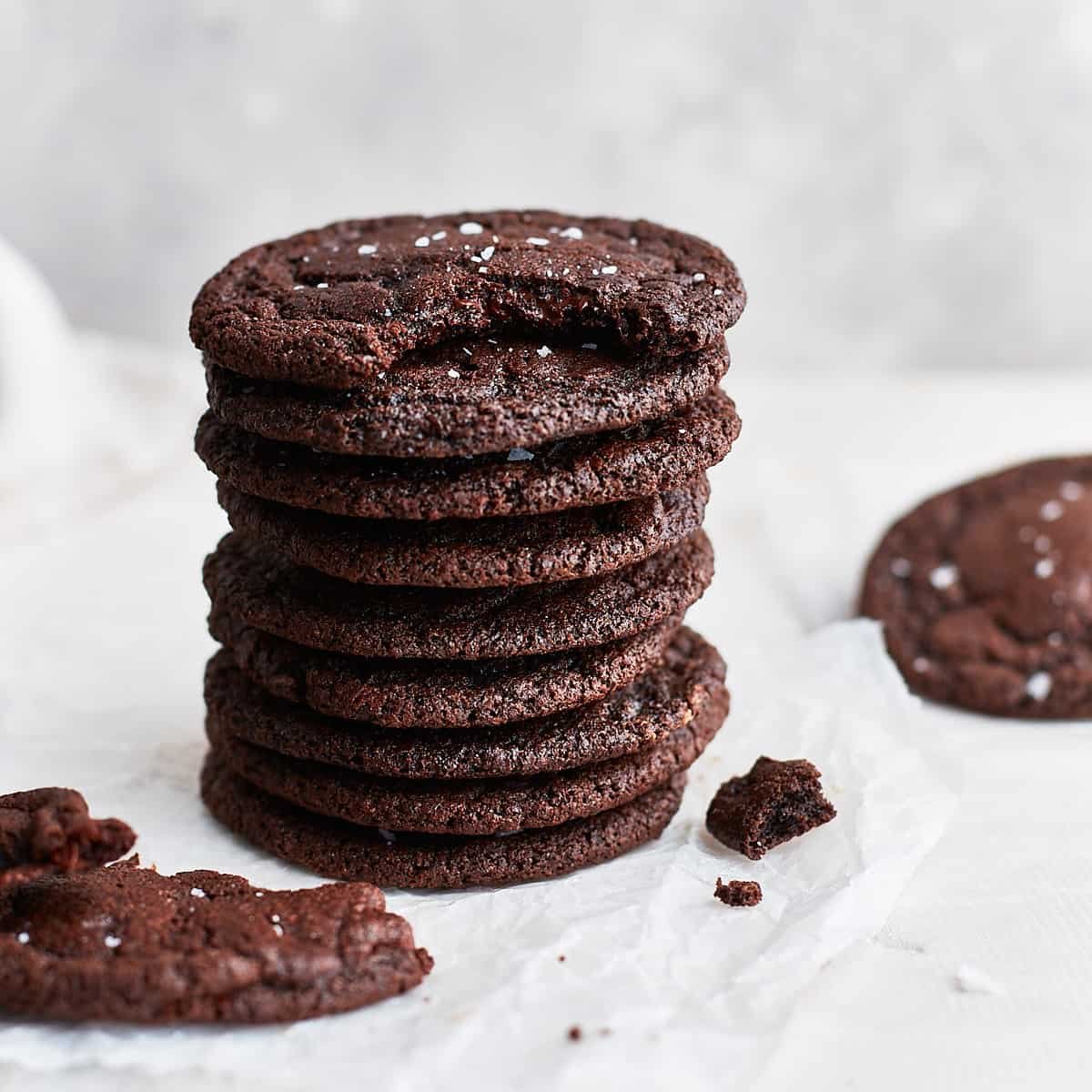

Crispy chocolate cookies are a delicious homemade treat for anyone who loves the rich taste of chocolate and the satisfying crunch of a perfectly baked cookie. Made with cocoa powder, butter, sugar, flour, and a few basic baking ingredients, these cookies are ideal for afternoon snacks, tea time, dessert platters, and special occasions.
The best part about this crispy chocolate cookies recipe with cocoa powder is that you do not need expensive chocolate bars or professional baking equipment. Unsweetened cocoa powder provides a deep chocolate flavor, while the right balance of butter, sugar, and flour helps create cookies that turn crisp as they cool.
Unlike soft and chewy chocolate cookies, crispy cookies need a slightly different baking approach. Ingredient measurements, dough thickness, oven temperature, and cooling time all affect the final texture. With the right technique, you can make chocolate cookies that have a delicate crunch, a rich cocoa aroma, and a deliciously sweet flavor.
This complete recipe guide explains everything you need to know, from selecting cocoa powder to mixing the dough, shaping the cookies, and baking them to perfection. You will also learn how to prevent common problems, customize the recipe, store the cookies properly, and serve them in creative ways.
Quick Recipe Overview
- Recipe name: Crispy Chocolate Cookies With Cocoa Powder
- Preparation time: 15 minutes
- Baking time: 10–14 minutes per batch
- Total time: Approximately 30–40 minutes
- Difficulty: Easy
- Yield: Approximately 20–24 small cookies
- Main ingredient: Unsweetened cocoa powder
- Texture: Crisp edges and crunchy centers after cooling
- Flavor: Rich chocolate with balanced sweetness
- Best for: Snacks, tea time, parties, dessert platters, and homemade gifts
This recipe is suitable for beginner bakers because the instructions are simple and the ingredients are easy to find in most supermarkets.
Why You Will Love These Crispy Chocolate Cookies
1. Rich Chocolate Flavor Without Chocolate Bars
Unsweetened cocoa powder provides a concentrated chocolate flavor without requiring melted chocolate.
This makes the recipe convenient when you want homemade chocolate cookies using ingredients already available in your kitchen.
2. A Satisfying Crunch
These cookies are designed to become crisp rather than remain soft in the middle.
The combination of sugar, butter, dough thickness, and sufficient baking helps create a crunchy texture. Allowing the cookies to cool completely is especially important because they continue to firm up after leaving the oven.
3. Simple Baking Ingredients
You do not need complicated ingredients or expensive decorations. Most of the ingredients are ordinary baking staples.
4. No Special Equipment Required
A mixing bowl, spoon, measuring tools, baking tray, and oven are enough to prepare this recipe.
An electric mixer can make the process quicker, but you can also mix the dough by hand.
5. Easy to Customize
You can add chocolate chips, cinnamon, orange zest, or chopped nuts to create different flavors.
The basic cocoa cookie recipe also works well with a light chocolate drizzle after baking.
Ingredients for Crispy Chocolate Cookies With Cocoa Powder
The following quantities make approximately 20–24 small cookies, depending on how much dough you use for each one.
| Ingredient | Amount | Purpose |
|---|---|---|
| All-purpose flour | 1 cup (125 g) | Provides structure |
| Unsweetened cocoa powder | ¼ cup (25 g) | Creates the chocolate flavor |
| Unsalted butter | ½ cup (113 g), softened | Adds richness and helps develop texture |
| Granulated sugar | ¾ cup (150 g) | Provides sweetness and supports crispness |
| Large egg | 1 | Binds the ingredients |
| Baking soda | ¼ teaspoon | Helps the cookies spread and brown |
| Salt | ¼ teaspoon | Balances the sweetness |
| Vanilla extract | 1 teaspoon | Enhances the flavor |
Choose unsweetened cocoa powder rather than sweetened drinking chocolate. Drinking chocolate often contains sugar and other ingredients that can change the flavor and consistency of the dough.
Choosing the Best Cocoa Powder
Cocoa powder is the main ingredient responsible for the chocolate flavor, so choosing the right type matters.
Natural cocoa powder: This has a strong, slightly acidic chocolate flavor and works well in many cookie recipes that use baking soda.
Dutch-process cocoa powder: This has been treated to reduce acidity and often produces a smoother, darker chocolate flavor. Because its acidity differs from natural cocoa, changing cocoa types can affect how a recipe behaves.
For the most predictable results, use natural unsweetened cocoa powder for your first batch.
Why Granulated Sugar Helps Create Crisp Cookies
Sugar does more than make cookies sweet. It also influences spreading, browning, and texture.
Granulated sugar helps these cookies develop a crisp exterior. As the cookies bake and lose moisture, their structure becomes firmer.
Using too little sugar may change how the cookies spread and crisp, so measure the quantity accurately.
Why Butter Should Be Softened
Softened butter combines more easily with sugar and helps create a uniform dough.
The butter should yield to gentle pressure but should not be melted or oily. Excessively warm butter may cause the cookies to spread too quickly.
Why an Egg Is Included
The egg binds the ingredients and provides moisture. It also contributes to the structure of the finished cookies.
Use one large egg for the listed quantities.
Equipment Needed
Before starting, prepare the following equipment:
- One large mixing bowl.
- One medium bowl for dry ingredients.
- A wooden spoon, spatula, or electric mixer.
- Measuring cups and spoons or a kitchen scale.
- A baking tray.
- Baking parchment paper.
- A spoon or cookie scoop.
- A cooling rack, if available.
A kitchen scale is especially useful for measuring flour and cocoa powder accurately. Too much flour can make the cookies dense, while too much cocoa can make them dry or bitter.
Step-by-Step Instructions for Making Crispy Chocolate Cookies
Step 1: Preheat the Oven
Preheat your oven to 350°F (175°C).
Allow it to reach the correct temperature before placing the cookies inside. An oven that is too cool may allow the dough to spread excessively, while an oven that is too hot can brown the edges before the cookies bake evenly.
Line a baking tray with parchment paper.
If you do not have parchment paper, use a clean, oven-safe cookie tray. Lightly grease it only if necessary.
Step 2: Mix the Dry Ingredients
In a medium bowl, combine the following:
- 1 cup all-purpose flour
- ¼ cup unsweetened cocoa powder
- ¼ teaspoon baking soda
- ¼ teaspoon salt
Whisk the ingredients together until the cocoa powder is evenly distributed throughout the flour.
Cocoa powder can form small lumps, so break them up with a whisk or sift the mixture if necessary.
Set the bowl aside.
Step 3: Cream the Butter and Sugar
Place the softened butter in a large mixing bowl.
Add the granulated sugar and mix with a wooden spoon or electric mixer until the mixture looks creamy and evenly combined.
If mixing by hand, press the butter against the sides of the bowl while stirring. This helps distribute the sugar without requiring an electric appliance.
The mixture does not need to become extremely fluffy. Aim for a smooth, consistent texture.
Step 4: Add the Egg and Vanilla
Add one large egg and 1 teaspoon of vanilla extract to the butter mixture.
Stir until the egg is fully incorporated.
Scrape the sides and bottom of the bowl to ensure that the ingredients are evenly combined.
The mixture may look slightly uneven at first, but it should become more uniform as you continue mixing.
Step 5: Add the Cocoa and Flour Mixture
Gradually add the dry ingredients to the wet mixture.
Stir gently until a chocolate cookie dough forms. Stop mixing as soon as the flour disappears.
The dough should be soft enough to shape but firm enough to hold its form.
If the dough seems excessively sticky, check that the butter was not melted and the ingredients were measured correctly. Avoid adding large amounts of extra flour because this can make the cookies dry.
Step 6: Shape the Cookies
Scoop approximately 1 tablespoon of dough for each cookie.
Roll each portion gently between your palms to form a ball, then flatten it slightly.
For a crispier result, make the cookies relatively thin and uniform in thickness. Thick cookies tend to retain more moisture in their centers.
Place the cookies on the prepared baking tray, leaving approximately 2 inches (5 cm) between them.
Do not overcrowd the tray because the cookies need room to spread.
Step 7: Bake the Cookies
Place the tray on the center rack of the preheated oven.
Bake for approximately 10–14 minutes, depending on the size and thickness of the cookies.
Begin checking them around the 10-minute mark. The edges should look set, and the surfaces may develop small cracks.
Because the cookies are dark, judging their color can be difficult. Pay attention to their structure and the time they have spent in the oven.
Do not automatically bake them until they feel completely hard. They will continue to firm up as they cool.
Step 8: Cool the Cookies on the Tray
Remove the tray from the oven and let the cookies rest for approximately 5 minutes.
At this stage, the cookies may still feel somewhat soft. This is normal.
As they cool, moisture escapes and their structure becomes firmer. Moving them too soon can cause them to break.
Step 9: Transfer to a Cooling Rack
Carefully transfer the cookies to a cooling rack or another cool, dry surface.
Allow them to cool completely before judging their final crispness.
If the cookies are still soft after cooling, they may need a slightly longer baking time during your next batch. Oven performance, cookie thickness, and ingredient measurements can all affect the outcome.
Step 10: Serve the Crispy Chocolate Cookies
Once completely cool, arrange the cookies on a serving plate.
Enjoy them with milk, coffee, tea, or hot chocolate. You can also serve them alongside ice cream or use them as a crunchy topping for other desserts.
For a decorative finish, drizzle melted chocolate over the cooled cookies and allow it to set before serving.
How to Make Chocolate Cookies Extra Crispy
If your goal is a crunchy chocolate cookie rather than a soft one, focus on the following techniques.
Make the Cookies Thin
Cookie thickness has a major effect on texture.
Thin cookies generally lose moisture more easily than thick cookies. Flattening the dough evenly before baking helps create a more consistent crunch.
However, avoid making them so thin that they become fragile or burn quickly.
Measure the Flour and Cocoa Correctly
Too much flour or cocoa powder can produce dry, dense cookies rather than pleasantly crisp ones.
Weighing ingredients is the most reliable method. If using cups, spoon the ingredients into the measuring cup and level the top without packing them down.
Use Granulated Sugar
Granulated sugar helps the cookies spread and contributes to a crisp texture.
Brown sugar contains more moisture-retaining components and can produce a softer, chewier result. For this recipe, granulated sugar is the preferred choice.
Bake Until the Edges Are Set
The cookies need enough time in the oven to develop their structure and lose some moisture.
Begin checking them at 10 minutes and continue baking in short intervals if needed.
Remember that darker cocoa cookies can make visual judgments difficult. Avoid relying on color alone.
Allow Complete Cooling
This is one of the most important steps.
A cookie that feels soft straight from the oven may become crisp after cooling. Wait until the cookies reach room temperature before deciding whether the recipe needs adjustment.
Store Them Properly
Moisture from the surrounding air can soften crisp cookies.
Store them in an airtight container once they have cooled completely. Avoid placing them in a container while warm because trapped steam can make them less crisp.
Common Mistakes to Avoid
| Problem | Possible reason | Solution |
|---|---|---|
| Cookies are too soft | They need more baking time or have not cooled fully | Cool completely and adjust baking time slightly |
| Cookies are bitter | Too much cocoa or unsweetened cocoa was confused with sweetened chocolate powder | Measure cocoa accurately and use the specified type |
| Cookies are too dry | Too much flour or cocoa | Weigh the dry ingredients |
| Cookies spread too much | Butter was too warm or dough was too soft | Use softened butter and a cool baking tray |
| Cookies are thick and cakey | Dough portions were too thick or ingredient ratios changed | Flatten the dough evenly and follow the measurements |
| Cookies burn underneath | Oven temperature is too high or the tray is too dark | Check the oven temperature and use a lighter-colored tray |
| Cookies break easily | They were moved while hot | Allow them to rest on the tray before transferring |
Easy Variations of Crispy Chocolate Cookies
Once you have mastered the basic recipe, you can create several variations by adding small amounts of other ingredients.
1. Chocolate Chip Cocoa Cookies
Add approximately ⅓ cup of chocolate chips to the finished dough.
Mini chocolate chips work particularly well in small cookies because they distribute evenly.
Keep in mind that the extra chocolate may make some parts of the cookies slightly softer, depending on the quantity and type used.
2. Chocolate Orange Cookies
Add 1–2 teaspoons of finely grated orange zest to the butter and sugar mixture.
Orange provides a fresh citrus aroma that complements the cocoa flavor.
This variation is particularly enjoyable during the winter holidays or whenever you want something different from a traditional chocolate cookie.
3. Cinnamon Chocolate Cookies
Add approximately ¼–½ teaspoon of ground cinnamon to the dry ingredients.
Cinnamon introduces a warm flavor that works well with dark cocoa.
Start with a small amount so that it complements rather than overwhelms the chocolate.
4. Double Chocolate Cookies
Replace a small portion of the all-purpose flour with additional cocoa powder or add chocolate chips, making sure the dough remains balanced.
For the most reliable texture, use a tested double chocolate variation rather than simply adding large amounts of cocoa.
5. Chocolate Coconut Cookies
Add approximately ¼ cup of finely shredded coconut to a suitable variation of the dough.
Coconut creates additional texture and a mild tropical flavor. Because it absorbs moisture, the dough may behave differently from the original recipe.
6. Nutty Chocolate Cookies
Fold approximately ¼ cup of finely chopped walnuts, almonds, or hazelnuts into the dough.
Nuts add crunch and complement the cocoa flavor.
If serving these cookies to others, clearly identify the nuts and consider allergy requirements.
7. Chocolate Cookies With a Sea Salt Finish
Sprinkle a very small amount of flaky salt over the dough before baking.
The salt creates a contrast with the sweetness and can enhance the chocolate flavor.
Use only a small amount, particularly if the recipe already contains salt.
Ingredient Substitutions
Some ingredients can be substituted, but changes may affect the final texture.
| Original ingredient | Possible substitute | Expected difference |
|---|---|---|
| Unsalted butter | Salted butter | Similar texture; reduce added salt |
| Granulated sugar | Caster sugar | Usually similar results when measured by weight |
| Vanilla extract | Almond extract in a smaller quantity | Different flavor |
| All-purpose flour | One-to-one gluten-free baking blend | Texture may be more delicate |
| Natural cocoa powder | Dutch-process cocoa powder | Flavor, color, and leavening behavior may change |
Can You Use Drinking Chocolate Instead of Cocoa Powder?
Drinking chocolate is not an ideal direct replacement because it often contains sugar, milk powder, or other ingredients.
Using it instead of unsweetened cocoa powder can make the cookies sweeter and change their texture.
For the best results, use unsweetened cocoa powder.
Can You Make These Cookies Dairy-Free?
A baking-quality plant-based butter alternative may work, but its fat and water content can affect the dough.
Choose a firm product designed for baking and check the ingredient labels. The finished cookies may spread differently from those made with dairy butter.
Can You Make Them Gluten-Free?
A one-to-one gluten-free flour blend designed for baking is a reasonable starting point.
Different blends absorb moisture differently, so the dough may need adjustments. If baking for someone with celiac disease, avoid cross-contact with gluten-containing ingredients and equipment.
How to Store Crispy Chocolate Cookies
Proper storage helps preserve the cookies’ crunch and chocolate flavor.
Room-Temperature Storage
Allow the cookies to cool completely before placing them in an airtight container.
Store them in a cool, dry place away from direct sunlight. For the best quality, aim to enjoy them within approximately 5–7 days.
Warm, humid conditions can cause crisp cookies to soften more quickly.
Can You Refrigerate Chocolate Cookies?
Plain chocolate cookies generally do not require refrigeration.
Refrigeration can introduce moisture during temperature changes and may affect their crispness. An airtight container in a cool, dry place is usually preferable.
Cookies containing perishable fillings or toppings may need different storage conditions.
How to Freeze Baked Chocolate Cookies
You can freeze baked cookies for later use.
- Let the cookies cool completely.
- Place them in a freezer-safe airtight container.
- Separate layers with parchment paper.
- Seal and label the container.
- Freeze for approximately 2–3 months for good quality.
Thaw them at room temperature in their covered container. If the cookies lose some crispness, you can try warming them briefly in a low oven and allowing them to cool completely again.
Can You Freeze Chocolate Cookie Dough?
Yes. Shape the dough into portions and freeze them on a tray until firm.
Transfer the portions to a freezer-safe container or bag.
When ready to bake, follow the recipe’s temperature instructions and check the cookies carefully. Frozen dough may need additional baking time.
Serving Ideas for Crispy Chocolate Cookies
These cookies are versatile enough for everyday snacks and special occasions.
With milk: Serve them with cold milk for a classic chocolate snack.
With coffee: Their cocoa flavor pairs well with espresso, cappuccino, and regular coffee.
With tea: Serve them with black tea or other favorite varieties for afternoon refreshments.
With ice cream: Crumble a cookie over vanilla ice cream or serve the cookies on the side.
As a dessert platter: Combine them with brownies, vanilla cookies, and fresh fruit.
As homemade gifts: Arrange the cooled cookies in a food-safe box lined with parchment paper.
As a cheesecake topping: Crush the cookies and sprinkle the crumbs over a dessert where a crunchy chocolate topping would be suitable.
Nutrition Information
The following nutritional values are estimates. Actual amounts vary depending on ingredient brands, cookie size, and the final number of cookies.
| Nutrient | Approximate amount per cookie |
|---|---|
| Calories | 80–105 |
| Carbohydrates | 10–13 g |
| Fat | 4–6 g |
| Protein | 1–2 g |
| Sugar | 6–9 g |
Estimate assumes approximately 22 small cookies made using the listed ingredients.
These cookies are a dessert rather than a complete meal. Enjoy them in portions that suit your dietary needs.
Frequently Asked Questions
1. Can I make crispy chocolate cookies without melted chocolate?
Yes. Unsweetened cocoa powder provides the chocolate flavor, so you do not need melted chocolate bars for this recipe.
2. Which cocoa powder is best for chocolate cookies?
Natural unsweetened cocoa powder is a good starting choice for this recipe because it works well with baking soda. Dutch-process cocoa can also be used in appropriately formulated recipes, but changing cocoa types may affect the results.
3. Why are my chocolate cookies soft after baking?
Cookies often feel soft when they first leave the oven. Allow them to cool completely before deciding whether they need additional baking time.
4. How do I make chocolate cookies crunchy?
Use the correct ingredient proportions, shape the cookies relatively thinly, bake until the edges are set, and allow them to cool completely. Store them in an airtight container to protect them from humidity.
5. Can I make these cookies without an electric mixer?
Yes. You can combine the butter and sugar with a wooden spoon, then mix in the egg, vanilla, and dry ingredients by hand.
6. Why do my chocolate cookies taste bitter?
You may have added too much cocoa powder, used an incorrect ingredient quantity, or substituted an ingredient that changed the sweetness. Measure the cocoa accurately and use unsweetened cocoa as specified.
7. Can I use brown sugar instead of white sugar?
Yes, but the texture may become softer and chewier because brown sugar retains more moisture. Granulated sugar is preferable when your main goal is a crisp cookie.
8. How long should chocolate cookies bake?
Bake at 350°F (175°C) for approximately 10–14 minutes. Thin cookies may finish earlier, while thicker cookies may need additional time.
9. Can I add chocolate chips?
Yes. Fold approximately ⅓ cup of chocolate chips into the dough after the dry ingredients have been incorporated.
10. Can I make these cookies egg-free?
You can use a suitable egg substitute, but the result may differ in structure and texture. For consistent results, use a recipe specifically developed for egg-free chocolate cookies.
11. Why did my cookies become hard?
Overbaking and excessive flour are common causes. Check the cookies early and remove them when the edges are set.
12. Can I make these cookies in an air fryer?
Yes, with adjustments. Use a suitable heat-safe tray or liner, bake a small test batch, and monitor the cookies closely because air fryers vary in temperature and airflow.
13. How do I keep chocolate cookies crispy?
Cool them completely before storing them in an airtight container. Keep them in a cool, dry place and avoid exposing them to humid air.
14. Can I prepare the dough ahead of time?
Yes. Store the dough in a covered container in the refrigerator if you need to prepare it in advance. The dough will firm up, so allow it to become manageable before shaping.
15. Can I use these cookies as a homemade gift?
Yes. Let them cool completely and pack them in a food-safe tin or box. You can add parchment paper between layers and decorate the package with a ribbon.
Final Thoughts
Crispy chocolate cookies with cocoa powder are a simple and satisfying homemade dessert. You can prepare them using ordinary baking ingredients without purchasing expensive chocolate bars or professional equipment.
For the best results, measure the flour and cocoa powder accurately, use softened butter, avoid overmixing the dough, shape the cookies evenly, and allow them to cool completely before judging their crispness.
Once you master the basic recipe, experiment with chocolate chips, orange zest, cinnamon, or chopped nuts to create new flavors.
These homemade cookies are ideal for tea time, family gatherings, parties, and anyone who enjoys a rich chocolate flavor with a satisfying crunch.