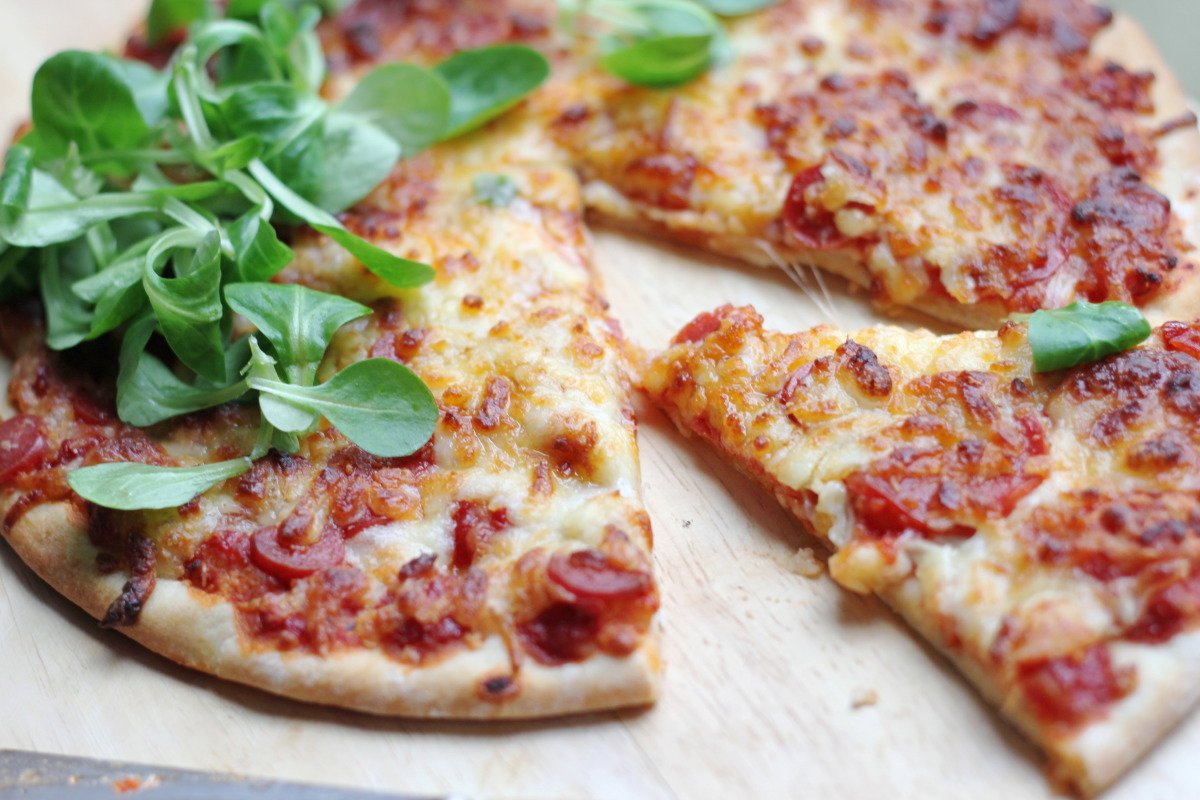


Making homemade pizza does not have to be complicated or expensive. With a few everyday ingredients, you can prepare a delicious pizza at home without ordering takeout or buying a ready-made base. This quick homemade pizza recipe uses simple flour-based dough, tomato sauce, cheese, and your favorite toppings to create a satisfying meal for the whole family.
You do not need a professional pizza oven or expensive equipment. A regular kitchen oven, mixing bowl, baking tray, and a little patience are enough to make a crisp-edged pizza with a soft center.
This recipe is ideal for busy weeknights, family lunches, weekend snacks, and anyone learning to make pizza from scratch. You can also customize it with vegetables, chicken, herbs, or other ingredients already available in your kitchen.
Recipe Overview
- Recipe name: Quick Homemade Pizza Using Simple Ingredients
- Preparation time: 20–25 minutes
- Dough rising time: 30–45 minutes
- Cooking time: 12–18 minutes
- Total time: Approximately 1 hour 10 minutes to 1 hour 30 minutes
- Servings: 2–3 people
- Yield: One medium pizza
- Difficulty: Beginner-friendly
- Cooking method: Oven baking
The rising time depends on the temperature of your kitchen and the yeast you use. If you need pizza more quickly, you can use a suitable quick-rise dough method, but allowing the dough to rest usually improves its texture and flavor.
Why Make Homemade Pizza?
Homemade pizza offers flexibility, convenience, and control over the ingredients. Instead of relying on a fixed menu, you can create a pizza that suits your family’s preferences and budget.
1. It Can Be More Affordable
Basic pizza dough requires flour, water, yeast, salt, and a little oil. You can prepare a tomato sauce from canned tomatoes or ordinary fresh tomatoes, then use the cheese and toppings you already have.
Making pizza at home can be economical, especially when cooking for several people.
2. You Control the Toppings
Some people prefer a simple cheese pizza, while others enjoy onions, peppers, mushrooms, olives, or cooked chicken. Homemade pizza allows you to add the ingredients you like and leave out anything you do not want.
3. It Is Beginner-Friendly
You do not need professional baking skills. Once you understand how to mix, knead, shape, and bake the dough, you can make pizza repeatedly with small adjustments to suit your oven.
4. It Is Useful for Family Meals
Pizza can be served for lunch, dinner, or an informal gathering. You can divide the dough into smaller portions so everyone can choose their own toppings.
5. You Can Adjust the Recipe
Use a thin crust, make a thicker base, add herbs to the dough, or prepare a vegetable-heavy topping. The same basic recipe can be adapted to different tastes and ingredients.
Ingredients for Homemade Pizza
The quantities below make one medium pizza.

For the Pizza Dough
| Ingredient | Quantity | Purpose |
|---|---|---|
| All-purpose flour | 2 cups (about 250 g) | Forms the pizza crust |
| Warm water | ¾ cup (180 ml), approximately | Hydrates the dough |
| Instant yeast | 1 teaspoon | Helps the dough rise |
| Sugar | 1 teaspoon | Supports yeast activity and browning |
| Salt | ¾ teaspoon | Improves flavor |
| Olive oil or neutral cooking oil | 1 tablespoon | Adds tenderness and makes dough easier to handle |
For the Pizza Sauce
| Ingredient | Quantity | Purpose |
|---|---|---|
| Tomato sauce or crushed tomatoes | ½ cup | Provides the main sauce |
| Garlic, minced | 1 small clove, optional | Adds flavor |
| Dried oregano | ½ teaspoon | Gives a familiar pizza aroma |
| Black pepper | A pinch | Adds mild seasoning |
| Salt | To taste | Balances the sauce |
| Olive oil | 1 teaspoon, optional | Adds richness |
You can use plain tomato puree if that is what you have. If the puree is very thick, add a small amount of water. If it is watery, simmer it briefly until it thickens.
For the Cheese and Toppings
- 1 cup grated mozzarella or another suitable melting cheese
- ½ small onion, thinly sliced
- ½ small bell pepper, thinly sliced
- 2–3 mushrooms, sliced, optional
- A few olives, optional
- Cooked chicken pieces, optional
- Dried oregano or fresh basil, optional
Do not use every topping at once. Too many ingredients can make the pizza wet and heavy. Choose two or three toppings that complement one another.
Food-safety note: If you add chicken, use fully cooked chicken and handle it separately from raw meat. Avoid placing raw chicken directly on a pizza that will bake for only a short time.
Equipment You Will Need
You can make this homemade pizza recipe with common kitchen equipment:
- A large mixing bowl
- Measuring cups and spoons or a kitchen scale
- A wooden spoon or spatula
- A clean surface for kneading
- A rolling pin, or your hands for shaping
- A baking tray or pizza pan
- A regular oven
- A grater for cheese
- A knife and chopping board
- A spoon for spreading sauce
A pizza stone is optional. A preheated, sturdy baking tray can also help the bottom crust cook properly.
Step 1: Prepare the Pizza Dough
Start by measuring the flour into a large mixing bowl. Add the instant yeast, sugar, and salt, then stir to distribute the dry ingredients.
Pour in most of the warm water and add the oil. Mix with a spoon until the flour begins to form a rough dough.
Add the remaining water gradually if the dough feels dry. Flour absorbs water differently depending on its type, so you may not need every drop.
What Should Pizza Dough Feel Like?
The dough should be soft and slightly tacky. It should hold together as a ball without leaving a thick layer of wet dough on your hands.
If the dough is too sticky, resist the urge to add a large amount of flour immediately. Knead it for a few minutes first. If it is still difficult to handle, add flour one tablespoon at a time.
If it feels dry or cracks when folded, wet your hands or add a little water and knead again.
Step 2: Knead the Dough
Transfer the dough to a clean, lightly floured work surface.
Push it away from you with the heel of your hand, fold it back toward the center, and turn it slightly. Repeat this process for approximately 5–8 minutes.
As you knead, the dough should become smoother and more elastic. This develops gluten, which helps the crust hold its shape and gives it a pleasant texture.
How to Tell When the Dough Is Ready
Look for these signs:
- The surface becomes smoother.
- The dough stretches instead of tearing immediately.
- It holds together in a soft ball.
- It feels elastic when gently pressed.
You do not need to knead pizza dough perfectly. A little variation in texture is normal, especially when using all-purpose flour.
Step 3: Let the Dough Rise
Lightly oil a clean bowl and place the dough inside. Turn it once so that the surface is lightly coated with oil.
Cover the bowl with a clean kitchen towel, reusable cover, or plastic wrap. Leave it in a warm place for approximately 30–45 minutes, or until it becomes noticeably larger and puffy.
The exact time depends on room temperature and yeast activity. In a cooler kitchen, the dough may need longer.
Why Is Rising Important?
During fermentation, yeast produces gas that expands the dough. This helps the crust develop a lighter texture instead of becoming hard and dense.
Allowing the dough to rise also makes it easier to stretch and shape. If you rush this step, the dough may resist stretching and shrink back when you try to roll it out.
Can You Let Pizza Dough Rise Longer?
Yes. You can refrigerate covered pizza dough for a slower rise if you want to prepare it ahead of time. Cold dough usually takes longer to ferment, so allow it to warm slightly before shaping if it is too firm to stretch.
For this quick recipe, a single short rise is sufficient.
Step 4: Prepare the Pizza Sauce
While the dough rises, prepare the sauce.
Place the tomato sauce or crushed tomatoes in a small bowl. Add the minced garlic, oregano, black pepper, and salt. Stir well.
If you are using plain tomato puree, taste it before adding extra seasoning. Some prepared sauces already contain salt, garlic, herbs, or sugar.
How to Make a Simple Sauce From Fresh Tomatoes
If you do not have packaged tomato sauce, use one or two ripe tomatoes.
- Wash the tomatoes and chop them.
- Heat a teaspoon of oil in a small saucepan.
- Add the tomatoes and cook over medium heat.
- Break them down with a spoon as they soften.
- Add garlic, oregano, pepper, and a little salt.
- Simmer until the mixture thickens.
Allow the sauce to cool before spreading it over the dough. A thick sauce is better than a watery one because excess moisture can make the crust soggy.
You do not need to cook a prepared pizza sauce for a long time. If it already has a good consistency and flavor, simply season it and set it aside.
Step 5: Prepare the Toppings
Wash and dry your vegetables. Slice the onion and bell pepper thinly so they cook evenly. Slice mushrooms or other vegetables into small pieces.
Grate the cheese if it is not already grated.
If you are adding chicken, use cooked chicken that has been cooled and stored safely. Leftover cooked chicken can work well if it has been refrigerated promptly and remains safe to eat.
How Much Topping Should You Use?
For one medium pizza, approximately one cup of cheese and a modest layer of vegetables are enough.
Adding too many toppings may cause several problems:
- The center may become soggy.
- The crust may not cook evenly.
- The cheese may slide off when slicing.
- The pizza may require longer baking.
Spread toppings evenly rather than piling them in the center.
Step 6: Preheat the Oven
Preheat your oven to 230°C (450°F), or to the highest suitable temperature recommended by your oven and baking tray instructions.
A hot oven helps the crust set quickly and gives the bottom a better chance of becoming golden.
Place the oven rack in the middle or lower-middle position, depending on how your oven distributes heat.
If you are using a heavy baking tray, you can preheat it carefully. Slide the shaped pizza onto the hot tray only if you can do so safely. Otherwise, assemble the pizza on a cool, lightly greased or parchment-lined tray.
Always use oven mitts when handling hot cookware.
Step 7: Shape the Pizza Base
Once the dough has risen, transfer it to a lightly floured surface. Gently press it to release excess gas.
For a medium pizza, shape the dough into a circle approximately 25–30 cm (10–12 inches) wide, depending on how thick you want the crust.
You can use a rolling pin or stretch the dough with your hands.
How to Stretch Pizza Dough by Hand
- Press the dough into a small, flat disc.
- Work outward from the center.
- Gently stretch the edges while rotating the dough.
- Leave the outer edge slightly thicker if you want a raised crust.
- Stop if the dough keeps shrinking back, and let it rest for 5–10 minutes before continuing.
Avoid stretching it so thin that holes develop. If a small hole appears, pinch the dough together to seal it.
Thin-Crust Pizza
For a thin crust, spread the dough closer to the full diameter of the tray. Use a light layer of sauce and toppings, and check the pizza early during baking.
Soft, Thick-Crust Pizza
For a thicker base, keep the dough smaller and allow it to rest for an additional 10–15 minutes after shaping. It may need a few extra minutes in the oven.
Step 8: Transfer the Dough to the Baking Tray
Lightly grease the baking tray or line it with suitable parchment paper according to its instructions.
Place the shaped dough on the tray. If it has shrunk, gently stretch it back into shape.
You can use your fingertips to press small indentations across the center of the dough. This can help the center remain more even as it bakes.
If you prefer a crispier base, avoid using a thick layer of flour underneath the dough. Excess flour can burn and affect the flavor.
Step 9: Add the Sauce
Spread approximately ½ cup of tomato sauce over the pizza base using the back of a spoon.
Leave a narrow border around the edge for the crust. Spread the sauce in a thin, even layer.
You may not need all the sauce if your base is small. The aim is to cover the surface lightly rather than soak the dough.
A useful tip: If the sauce contains visible liquid, simmer it briefly before using it. A thicker sauce is one of the easiest ways to prevent homemade pizza from becoming soggy.
Step 10: Add the Cheese
Sprinkle the grated cheese evenly over the sauce.
Mozzarella is a popular choice because it melts well, but you can use another cheese suitable for melting. The result will vary according to the cheese’s moisture, fat content, and flavor.
Avoid adding an excessive amount of cheese. A moderate layer melts more evenly and allows the crust and toppings to cook properly.
If you prefer vegetables to sit visibly on top, you can sprinkle some of the cheese first, add the toppings, and finish with a little more cheese.
Step 11: Add the Toppings
Distribute the sliced onion, bell pepper, mushrooms, olives, or cooked chicken across the pizza.
Try to keep the toppings in a single, fairly even layer. This allows heat to circulate and reduces the amount of moisture released in one area.
For a simple vegetable pizza, use onions, peppers, and mushrooms. For a chicken pizza, add cooked chicken with a little oregano and black pepper.
If your vegetables release a lot of water, cook them briefly before placing them on the pizza. This is particularly helpful for mushrooms and other high-moisture toppings.
Step 12: Bake the Pizza
Place the prepared pizza in the preheated oven and bake for approximately 12–18 minutes.
The exact time depends on the oven, the thickness of the dough, the baking tray, and the quantity of toppings.
Check the pizza after about 10–12 minutes. It is generally ready when:
- The crust is golden around the edges.
- The cheese is melted and bubbling.
- The underside has developed some color.
- The center is cooked rather than wet or doughy.
If the top is browning too quickly while the base remains pale, move the tray to a lower rack or adjust the oven temperature slightly for the next attempt.
Do not judge readiness by melted cheese alone. The dough underneath must also be fully baked.
Step 13: Rest, Slice, and Serve
Remove the pizza carefully using oven mitts. Let it rest for approximately 3–5 minutes before cutting.
This short rest helps the melted cheese settle and makes the slices easier to handle.
Use a pizza cutter or a sharp knife to divide the pizza into slices. Serve warm with a simple salad, soup, or your favorite dipping sauce.
Fresh homemade pizza is best enjoyed shortly after baking, when the crust is warm and the cheese is melted.
The Complete Homemade Pizza Recipe at a Glance

Easy Homemade Pizza
One medium pizza · Simple everyday ingredients
A homemade crust with tomato sauce, melted cheese, and customizable toppings.
Ingredients checklist
2 cups (250 g) all-purpose flour¾ cup (180 ml) warm water, approximately1 teaspoon instant yeast1 teaspoon sugar¾ teaspoon salt1 tablespoon olive or neutral cooking oil½ cup tomato sauce or thick crushed tomatoes1 cup grated mozzarella or melting cheeseOnion, bell pepper, or other preferred toppings½ teaspoon dried oregano
0 of 10 ingredients readyCopy recipe
Expert Tips for Better Homemade Pizza
The basic recipe is simple, but these tips can help you improve the crust and avoid common mistakes.
1. Use Warm, Not Hot, Water
Yeast works best when the water is comfortably warm. Very hot water can damage the yeast and prevent the dough from rising.
If you have a thermometer, follow the yeast manufacturer’s recommended water temperature. Otherwise, aim for water that feels warm rather than hot.
2. Measure Flour Carefully
Too much flour can make the crust dry, hard, and difficult to stretch. If measuring with cups, spoon flour into the cup and level it rather than packing it tightly.
A kitchen scale provides more consistent results.
3. Do Not Rush the Dough
The dough should become visibly puffy before shaping. If your kitchen is cool, give it extra time.
A properly rested dough is usually easier to stretch and less likely to tear.
4. Keep the Sauce Layer Thin
Excess sauce can make the center soggy. Spread a thin, even layer and leave a small border around the edges.
If you are using fresh tomatoes, cook the sauce until it thickens and allow it to cool before assembling the pizza.
5. Avoid Overloading the Pizza
More toppings do not always produce a better pizza. A heavy layer can trap moisture and prevent the center from baking evenly.
Choose a few complementary ingredients and distribute them evenly.
6. Preheat the Oven Fully
A fully heated oven helps the crust cook and brown. Allow the oven to reach the required temperature before placing the pizza inside.
If your oven heats unevenly, rotate the tray carefully during baking if needed.
7. Use a Suitable Cheese
Mozzarella is a reliable option for a stretchy, melted topping. Other cheeses can work, but some release more oil or moisture than others.
Grate cheese from a block if convenient, and avoid adding so much that it covers the pizza in a thick, heavy layer.
8. Let the Pizza Rest Before Cutting
Cutting immediately can cause the cheese and toppings to slide off. A short rest helps the surface settle while keeping the pizza warm.
9. Keep the Dough Soft
If the dough feels stiff, add a little water rather than continuing to add flour. Soft dough is generally easier to shape and can produce a more tender crust.
10. Learn From the First Pizza
Every oven behaves differently. Use the first pizza to learn whether your oven needs a lower rack position, a longer baking time, or a thinner crust.
Make one adjustment at a time so you can identify what improves the result.
Common Homemade Pizza Problems and Solutions
| Problem | Possible cause | Solution |
|---|---|---|
| Dough does not rise | Inactive yeast, cold water, or a cool room | Check the yeast and allow more rising time |
| Crust is hard | Too much flour or excessive baking | Adjust hydration and check the pizza earlier |
| Pizza center is soggy | Too much sauce or wet toppings | Use thicker sauce and reduce topping moisture |
| Base is pale | Oven or tray was not hot enough | Preheat thoroughly and check rack position |
| Cheese burns before crust cooks | Oven heat is uneven or too intense from above | Move the tray lower or adjust the temperature |
| Dough keeps shrinking | Gluten is tight and needs to relax | Cover and rest the dough for 5–10 minutes |
| Crust tears while shaping | Dough is too dry or stretched too aggressively | Let it rest and stretch gradually |
| Pizza is bland | Insufficient seasoning or sauce flavor | Season the sauce and add herbs to taste |
| Toppings slide off | Too much cheese, sauce, or topping weight | Use moderate quantities and rest before slicing |
| Bottom burns | Tray is too close to the heating element or oven runs hot | Move to a higher rack or reduce heat slightly |
Why Is My Homemade Pizza Crust Tough?
A tough crust can result from excess flour, insufficient resting, or overbaking. Make sure the dough remains soft and give it enough time to rise.
Also avoid rolling or stretching the dough aggressively. If it resists, let it rest before trying again.
Why Is My Pizza Soggy in the Middle?
The most common causes are too much sauce, wet vegetables, or an oven that is not hot enough.
Use a thick sauce, dry vegetables after washing, and cook moisture-heavy toppings briefly when necessary. Make sure the oven has preheated completely.
Why Does the Dough Shrink When I Stretch It?
Dough sometimes shrinks because the gluten is still tense. Cover it and let it rest for 5–10 minutes, then try again.
Avoid forcing it into shape. Gentle stretching helps preserve the dough’s structure.
Easy Homemade Pizza Variations
Once you understand the basic recipe, you can create different flavors without changing the entire method.


7
1. Classic Cheese Pizza
For a simple cheese pizza, spread tomato sauce over the dough and cover it with grated mozzarella.
Add a small pinch of oregano and bake until the crust is golden and the cheese has melted. This version is ideal when you want a straightforward pizza without many toppings.
You can also add a little basil after baking for a fresh aroma.
2. Vegetable Pizza
Use a combination of sliced onions, bell peppers, mushrooms, olives, and tomatoes.
Wash and dry the vegetables before cutting them. If the mushrooms or other vegetables are particularly wet, cook them briefly in a pan to release some moisture.
Keep the topping layer moderate so the crust can bake evenly.
3. Homemade Chicken Pizza
Spread tomato sauce over the dough, add cheese, and distribute fully cooked chicken pieces across the surface.
Season the chicken with a little black pepper, oregano, or garlic powder before adding it. You can also include onions and bell peppers.
Never rely on the short pizza-baking time to cook raw chicken safely. Cook the chicken separately first, then use it as a topping.
4. Spicy Pizza
For a spicy version, add a small amount of chili flakes, sliced green chili, or another preferred spicy ingredient.
Mix the chili into the sauce or sprinkle it over the cheese. Start with a small quantity and adjust to taste.
You can combine spicy seasoning with vegetables or cooked chicken.
5. Garlic and Herb Pizza
Mix a little minced garlic and dried oregano into the tomato sauce. After baking, you can brush the crust lightly with garlic oil or a small amount of garlic butter.
Be careful not to use too much raw garlic, as it can burn or overpower the other flavors.
This pizza pairs well with a simple salad or soup.
6. Thin-Crust Pizza
For a thinner crust, stretch the dough over a larger area and use less sauce and fewer toppings.
Because the dough is thinner, the pizza may bake faster. Start checking it before the end of the estimated baking time.
Thin-crust pizza is useful when you prefer a crisp base rather than a soft, thick center.
7. Thick-Crust Pizza
Keep the dough smaller so the base remains thicker. After shaping, let it rest until slightly puffy before adding the sauce and toppings.
Bake until the center is cooked through. A thicker crust may require additional time, so do not remove it just because the edges have browned.
8. Pizza With Leftover Vegetables
Small amounts of cooked vegetables can be used as toppings, helping you reduce food waste.
Drain excess liquid from vegetables before adding them. Season them lightly and spread them evenly over the sauce and cheese.
Avoid using leftovers that have been stored unsafely or show signs of spoilage.
9. Mini Homemade Pizzas
Divide the dough into four or more small portions and shape each one into a small round base.
Let the pieces rest briefly, then add a little sauce, cheese, and toppings. Smaller pizzas are easy to customize for different family members.
They may bake faster than a full-size pizza, so begin checking them early.
10. Pizza Without Mozzarella
If mozzarella is unavailable, use another cheese that melts well and suits your taste. A mild cheddar or a suitable cheese blend can work.
The texture may be less stretchy, but the pizza can still taste excellent. Avoid adding too much cheese, particularly if it releases a lot of oil during baking.
How to Make Pizza Sauce From Scratch
A homemade tomato sauce is easy to prepare and can be adjusted to your preferred flavor.
Ingredients
- 2 medium ripe tomatoes or approximately ½ cup crushed tomatoes
- 1 teaspoon olive oil
- 1 small garlic clove, finely chopped
- ½ teaspoon dried oregano
- A pinch of salt
- A pinch of black pepper
Method
- Heat the oil in a small saucepan over medium heat.
- Add the garlic and stir briefly until fragrant.
- Add the chopped tomatoes or crushed tomatoes.
- Stir in the oregano, salt, and black pepper.
- Cook gently until the tomatoes soften and the liquid reduces.
- Mash the mixture with a spoon if you prefer a smoother sauce.
- Allow it to cool before spreading it over the pizza dough.
The goal is a thick, spreadable sauce. If it is watery, continue simmering it for a few more minutes.
You can make extra sauce and refrigerate it in a clean, covered container. Cool it promptly and follow food-safety guidance for storing cooked leftovers.
Can You Make Homemade Pizza Without an Oven?
Yes, you can make a stovetop pizza using a heavy frying pan with a lid, although the texture will differ from an oven-baked pizza.
Shape a smaller, relatively thin dough base. Place it in a lightly greased pan over low heat and cook until the underside begins to set. Turn the base if necessary, add a modest amount of thick sauce, cheese, and cooked toppings, then cover the pan.
Cook over low heat until the base is done and the cheese has melted. Keep the heat gentle so the bottom does not burn before the top warms through.
This method works best with a thin crust and a small quantity of toppings. Because a covered pan traps steam, the result may be softer rather than crisp.
Make sure any meat toppings are fully cooked before adding them.
How to Store and Reheat Leftover Pizza
Homemade pizza is best freshly baked, but leftovers can be saved for another meal if handled safely.
Storing Pizza in the Refrigerator
Let the pizza cool briefly, then refrigerate it within two hours of cooking. Place slices in a clean, covered container.
Refrigerated leftovers are generally best used within 3–4 days. If the room is very hot, do not leave the pizza on the counter for an extended period.
Freezing Homemade Pizza
Freezing is useful when you want to save extra slices.
- Allow the pizza to cool.
- Separate slices with baking paper if needed.
- Wrap them well or place them in a freezer-safe container.
- Label the container with the date.
- Freeze promptly.
For good quality, aim to use frozen pizza within about 1–2 months.
Reheating in a Frying Pan
Place a slice in a frying pan over low to medium-low heat. Cover it loosely with a lid and warm until the base becomes crisp and the cheese is hot.
If the bottom browns too quickly, reduce the heat. A few drops of water beside the slice—not directly on the pizza—can create steam under the lid, but use only a small amount to avoid making the crust wet.
Reheating in the Oven
Preheat the oven to approximately 180°C (350°F). Place the slices on a baking tray and heat until warmed throughout.
The time depends on slice thickness and whether the pizza is refrigerated or frozen. If reheating frozen pizza, allow more time and check that the center is hot.
Reheating in a Microwave
Place a slice on a microwave-safe plate and heat in short intervals until hot. The crust may become softer than it would in an oven or frying pan.
For a crispier base, finish the warmed slice briefly in a hot frying pan if convenient.
How to Tell Whether Leftover Pizza Has Spoiled
Discard pizza that has been stored too long or shows mold, unusual odors, or other signs of spoilage. Do not taste food to determine whether it is safe.
Keep the refrigerator at a suitable temperature and avoid repeatedly leaving leftovers at room temperature.
Frequently Asked Questions
1. Can I make homemade pizza with simple ingredients?
Yes. You can make pizza with flour, yeast, water, salt, oil, tomato sauce, cheese, and a few toppings. These ingredients are enough for a basic homemade pizza without purchasing a ready-made crust.
2. Can I make pizza without yeast?
Yes, but the crust will have a different texture. You can use a suitable baking-powder pizza dough recipe instead of yeast dough. It will generally be less chewy and will not develop the same fermented flavor.
If using baking powder, follow a recipe designed specifically for it rather than replacing the yeast in this recipe with the same quantity of baking powder.
3. Can I use all-purpose flour for pizza dough?
Yes. All-purpose flour works well for homemade pizza and is widely available. Bread flour may produce a chewier crust because it usually contains more protein, but it is not essential.
4. How long should pizza dough rise?
For this recipe, allow approximately 30–45 minutes, or until the dough becomes noticeably puffy. A cooler kitchen may require more time.
Use the dough’s appearance as your guide rather than relying entirely on a timer.
5. What temperature should I use to bake homemade pizza?
A temperature of approximately 230°C (450°F) is a useful starting point for a regular home oven, provided it is suitable for your cookware and oven instructions.
The correct temperature and baking time depend on your oven, crust thickness, and toppings.
6. How do I make pizza crust crispy?
Preheat the oven fully, use a suitable baking tray, and avoid adding too much sauce or too many wet toppings.
A thin layer of sauce and a moderately topped pizza usually make it easier for moisture to escape during baking.
7. Can I use ketchup instead of pizza sauce?
You can use ketchup in a pinch, but its flavor is generally sweeter and more tangy than traditional pizza sauce. Use a thin layer so it does not overpower the other ingredients.
If available, tomato puree seasoned with oregano, garlic, salt, and pepper is a more versatile alternative.
8. Which cheese is best for homemade pizza?
Mozzarella is a popular choice because it melts well and has a mild flavor. Other melting cheeses can work, including cheddar or a suitable blend.
The final texture depends on the cheese’s moisture and fat content.
9. Can I make pizza dough ahead of time?
Yes. Place the dough in a covered, lightly oiled container and refrigerate it for a slower rise. When you are ready to use it, allow it to soften enough to stretch comfortably.
Cold fermentation can change the flavor and texture, so adjust the timing according to how the dough develops.
10. Can I make pizza without a pizza pan?
Yes. A regular baking tray works well. Lightly grease it or use suitable parchment paper according to its instructions.
You can also use another oven-safe pan, provided it is appropriate for the temperature and method you choose.
11. Why is my homemade pizza dough sticky?
The dough may contain more water than your flour can easily absorb, or it may need additional kneading. Let it rest briefly before making adjustments.
If it remains excessively sticky, add a small amount of flour at a time. Avoid adding too much because it can make the crust dry.
12. Can I make a vegetarian pizza with this recipe?
Absolutely. Use vegetables such as onions, bell peppers, mushrooms, olives, and tomatoes. Combine them with tomato sauce, cheese, and herbs.
Dry the vegetables after washing them, and cook especially watery vegetables briefly before adding them.
13. Can I use leftover cooked chicken as a pizza topping?
Yes, provided the chicken was cooked thoroughly, stored safely, and is still suitable to eat. Cut it into small pieces and distribute it evenly over the pizza.
Do not use chicken that has been left unrefrigerated for too long or shows signs of spoilage.
14. How many people does one medium pizza serve?
One medium pizza commonly serves about 2–3 people, depending on appetite, slice size, and side dishes. You can double the recipe to make two pizzas for a larger family.
15. Can I make this pizza dairy-free?
Yes. Use a suitable dairy-free cheese or leave the cheese out and add extra vegetables. Check the ingredient labels of the sauce, dough ingredients, and toppings if you need to avoid milk completely.
16. How do I prevent pizza from sticking to the tray?
Lightly grease the tray or use suitable baking parchment. Make sure the dough is not excessively wet, and avoid leaving it sitting on the tray for too long before baking.
If you use a preheated tray, take extra care when transferring the dough.
17. Can I freeze homemade pizza dough?
Yes. After preparing the dough, place it in a lightly oiled freezer-safe container or bag and freeze it. For best quality, use it within approximately 1–2 months.
Thaw it in the refrigerator, then allow it to soften and rise as needed before shaping. The dough may require additional time to become workable.
18. Is homemade pizza cheaper than ordering pizza?
It can be, particularly when you already have flour, oil, and seasonings at home. The cost depends on local ingredient prices, the amount of cheese and toppings used, and energy costs.
Making pizza at home also gives you greater control over portion sizes and ingredients.
Final Thoughts
This quick homemade pizza recipe using simple ingredients is an easy way to prepare a delicious meal without relying on takeout or ready-made pizza bases. With flour, yeast, water, oil, tomato sauce, cheese, and a few toppings, you can create a pizza that suits your family’s taste and budget.
For the best results, keep the dough soft, allow enough time for it to rise, use a thick tomato sauce, and avoid overloading the base with toppings. A fully preheated oven and a short resting period after baking also help improve the final texture.
Start with a simple cheese or vegetable pizza, then experiment with cooked chicken, garlic, herbs, or your favorite ingredients. Once you become comfortable with the dough, you can adjust the thickness, size, and toppings to create different homemade pizzas whenever you want.