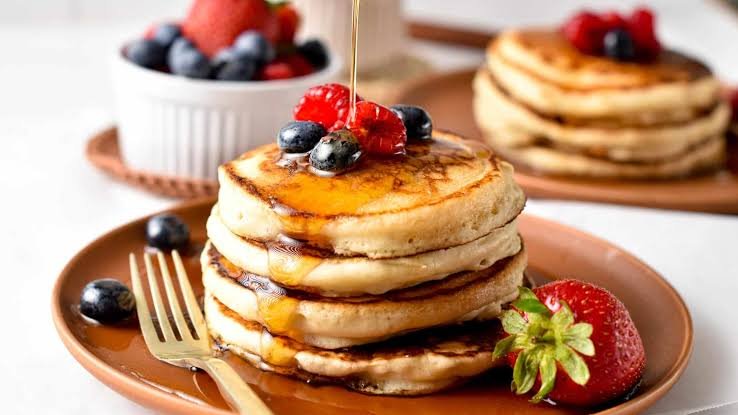


Making pancakes without eggs or milk is simple, affordable, and beginner-friendly. You can prepare soft, golden pancakes using everyday ingredients such as flour, water, baking powder, sugar, oil, and a pinch of salt. There is no need to buy special ingredients or use complicated cooking equipment.
This easy pancakes recipe without eggs or milk is ideal for quick breakfasts, afternoon snacks, and days when you have run out of dairy products. It is also useful for people who avoid eggs and dairy in their meals, provided they check that all packaged ingredients are suitable for their dietary needs.
The recipe produces tender pancakes with lightly crisp edges and a soft center. You can serve them with bananas, jam, honey, fruit, or your favorite toppings.
Recipe Overview
- Recipe name: Easy Pancakes Without Eggs or Milk
- Preparation time: 10 minutes
- Cooking time: 15–20 minutes
- Total time: Approximately 25–30 minutes
- Servings: 2–3 people
- Yield: About 6–8 small pancakes
- Difficulty: Easy
- Cooking method: Stovetop
- Special equipment: None required
The exact number of pancakes depends on how much batter you pour into the pan. Smaller pancakes are easier to flip, especially if you are making them for the first time.
Why Make Pancakes Without Eggs or Milk?
Traditional pancake recipes often use eggs and milk, but neither ingredient is essential for making a simple pancake. Baking powder helps the batter rise, while water provides the moisture needed to combine the flour and other ingredients.
1. Uses Basic Kitchen Ingredients
This recipe is designed around ingredients that many households already have. All-purpose flour, water, baking powder, sugar, salt, and cooking oil are enough to prepare a basic batch.
You do not need expensive dairy-free milk or specialty egg replacements.
2. Budget-Friendly Breakfast
Homemade pancakes can be an economical breakfast option because the main ingredients are inexpensive and versatile.
You can prepare a batch for several people without purchasing packaged pancake mixes. Adding seasonal fruit or a little homemade jam can make the meal more satisfying.
3. Suitable for Egg-Free and Dairy-Free Eating
The basic recipe contains no eggs and no milk. Use a plant-based oil and check the labels of ingredients such as baking powder, flavorings, and toppings if you need to avoid specific allergens.
If you are cooking for someone with a food allergy, also prevent cross-contact with utensils, pans, and surfaces that have touched the allergen.
4. Quick and Easy to Prepare
The batter takes only a few minutes to mix. After a short rest, you can cook the pancakes in a regular frying pan or nonstick skillet.
This makes the recipe useful for busy mornings when you want something homemade without spending a long time in the kitchen.
5. Easy to Customize
You can make these pancakes sweet or savory. Add cinnamon, vanilla, mashed banana, or a few chocolate chips for a sweeter breakfast. For a savory version, reduce or omit the sugar and add chopped herbs.
Ingredients for Pancakes Without Eggs or Milk
The following quantities make approximately 6–8 small pancakes.

| Ingredient | Quantity | Purpose |
|---|---|---|
| All-purpose flour | 1 cup (about 125 g) | Forms the pancake structure |
| Water | ¾ cup (180 ml), approximately | Hydrates the flour |
| Baking powder | 2 teaspoons | Helps pancakes rise |
| Sugar | 1–2 tablespoons | Adds sweetness and browning |
| Salt | ¼ teaspoon | Improves flavor |
| Neutral cooking oil | 1 tablespoon | Adds tenderness |
| Vanilla extract | ½ teaspoon, optional | Adds flavor |
| Extra oil for the pan | A small amount | Helps prevent sticking |
Important: Start with about ¾ cup of water, but add it gradually. Different flours absorb different amounts of liquid. The batter should be pourable but not as thin as water.
If your baking powder is already old or has lost its effectiveness, your pancakes may not become fluffy. Check the package date and store it according to the manufacturer’s instructions.
Equipment You Will Need
You can make these pancakes with ordinary kitchen tools:
- A medium mixing bowl
- A measuring cup and measuring spoons
- A whisk or fork
- A spoon or ladle
- A nonstick frying pan or skillet
- A spatula for flipping
- A plate for serving
A whisk helps combine the ingredients evenly, but a fork works perfectly well. If you do not have a nonstick pan, use a well-seasoned pan and a little cooking oil.
Step 1: Combine the Dry Ingredients
Place the flour in a medium mixing bowl. Add the baking powder, sugar, and salt.
Stir the ingredients together with a whisk or fork until they are evenly distributed.
This step matters because baking powder needs to be spread throughout the flour. If it gathers in one area, some pancakes may rise more than others.
For a less sweet pancake, use one tablespoon of sugar or leave it out. You can also use a small amount of cinnamon for extra flavor.
Step 2: Add the Water and Oil
Pour most of the water into the bowl and add the cooking oil. If you are using vanilla extract, add it now.
Stir gently until the dry ingredients are moistened and a smooth, thick batter forms. Add the remaining water a little at a time if the mixture seems too thick.
Do not worry if a few small lumps remain. Pancake batter does not need to be completely smooth.
What Should the Batter Look Like?
The batter should flow slowly from a spoon or ladle. It should be thick enough to hold some shape when poured into the pan, but loose enough to spread into a round pancake.
- Too thick: Add water one tablespoon at a time.
- Too thin: Add a little flour and stir gently.
- Very lumpy: Mix briefly until the largest lumps disappear.
Avoid vigorous mixing. Overmixing can make pancakes tougher because it develops more gluten in the flour.
Step 3: Let the Batter Rest
Allow the batter to rest for about 5–10 minutes before cooking.
This short rest gives the flour time to absorb the water and helps the batter become more consistent. The baking powder also begins working once it is mixed with liquid, so you do not need to leave the batter for a long period.
You may notice small bubbles forming on the surface. That is normal.
If the batter becomes noticeably thicker during the rest, add a teaspoon or two of water and stir gently. Do not beat it heavily.
Beginner tip: Prepare your pan and toppings while the batter rests so you can start cooking as soon as it is ready.
Step 4: Heat the Frying Pan
Place a nonstick frying pan or skillet over medium-low to medium heat. Allow it to warm for a couple of minutes.
Lightly coat the cooking surface with a small amount of oil. You can spread the oil with a paper towel or use a pastry brush, taking care not to touch the hot pan directly.
The right temperature is important. If the pan is too hot, the outside of the pancake may brown before the center cooks. If it is too cool, the pancakes may turn out pale and dry.
How to Test the Pan Temperature
Pour a small drop of batter into the pan. It should begin setting gradually and develop a little color without burning immediately.
If the test batter darkens in a few seconds, lower the heat. If it remains wet for a long time, increase the heat slightly.
Because stovetops vary, use the first pancake to judge the temperature for the rest of the batch.
Step 5: Pour the Pancake Batter
Use a ladle or measuring cup to pour approximately 2–3 tablespoons of batter into the pan for each small pancake.
Leave space between the pancakes so you can flip them easily. If your pan is large enough, you can cook two or three at a time.
Let the batter spread naturally. If necessary, gently guide it into a round shape with the back of a spoon.
Smaller pancakes are easier to handle because egg-free batter can be more delicate than traditional pancake batter.
How Thick Should Each Pancake Be?
Aim for a small pancake approximately 8–10 cm (3–4 inches) wide. The batter should be thick enough to make a soft center without spreading into a very thin crepe.
If you prefer thinner pancakes, add a little more water. For thicker pancakes, use slightly less water, but do not make the batter so thick that the middle remains uncooked.
Step 6: Cook the First Side
Cook the pancake for approximately 2–3 minutes, depending on the heat and thickness.
Watch the surface rather than relying only on the timer. As the pancake cooks, small bubbles may appear and some will begin to burst. The edges should look less wet and start to set.
The underside should develop a light golden-brown color.
If the bottom is becoming dark while the top remains very wet, lower the heat. If the pancake has not begun to set after several minutes, the pan may need a little more heat.
Do not press down on the pancake with the spatula. Pressing can flatten the soft interior and reduce its light texture.
Step 7: Flip the Pancake Carefully
Slide a thin spatula underneath the pancake and gently lift one edge to check the color. When the underside is golden and the upper surface has mostly set, flip it in one smooth movement.
Cook the second side for another 1–2 minutes, or until it is golden and cooked through.
Egg-free pancakes may be slightly more fragile than pancakes made with eggs. A thin spatula and a gentle flip help prevent tearing.
If a pancake breaks, do not worry. Reduce the pancake size slightly for the next one and allow the first side to cook longer before flipping.
Step 8: Finish Cooking the Remaining Batter
Transfer the cooked pancake to a clean plate. Repeat the process with the remaining batter, adding a little oil to the pan as needed.
Check the heat after every few pancakes. The pan can become hotter as cooking continues, so you may need to reduce the heat slightly.
If you are making a large batch, place the finished pancakes on a heat-safe plate in a low oven while you cook the rest. Avoid keeping them warm for too long, as they can dry out.
Once all the pancakes are ready, serve them with your favorite toppings.
The Complete Recipe at a Glance

Egg-Free, Milk-Free Pancakes
6–8 small pancakes · Ready in about 25–30 minutes
Simple ingredients and a regular frying pan are all you need.
Ingredients checklist
1 cup (125 g) all-purpose flour¾ cup (180 ml) water, added gradually2 teaspoons baking powder1–2 tablespoons sugar¼ teaspoon salt1 tablespoon neutral cooking oil½ teaspoon vanilla extract (optional)A little extra oil for cooking
0 of 8 ingredients readyCopy recipe
Tips for Fluffy Pancakes Without Eggs or Milk
A few simple techniques can improve the texture and flavor of your pancakes.
1. Check the Baking Powder
Baking powder helps the batter rise and creates a lighter texture. If it has lost its strength, your pancakes may be flat and heavy.
Keep baking powder tightly closed and store it in a cool, dry place. Replace it according to the package guidance.
2. Avoid Overmixing
Stir only until the flour is moistened and the batter comes together. A few small lumps are fine.
Excessive mixing can develop too much gluten and produce a chewy texture. Gentle mixing is particularly useful in egg-free recipes because the batter needs to remain soft.
3. Measure the Water Carefully
Adding too much water can make pancakes thin and difficult to flip. Too little water may leave the center heavy or undercooked.
Start with the amount listed in the recipe and adjust gradually. The ideal batter should be thick but pourable.
4. Do Not Cook Over Excessive Heat
Medium-low to medium heat gives the center time to cook before the outside becomes too dark.
If your pancakes brown quickly, lower the heat and allow the pan to cool slightly before continuing.
5. Wait for the Edges to Set Before Flipping
One of the biggest causes of broken pancakes is flipping too early. Wait until the edges look set and the surface has begun to form bubbles.
The pancake should release from the pan more easily when the first side is ready.
6. Use a Thin Spatula
A thin, flexible spatula can slide under the pancake without tearing it. Lift the pancake slightly to check the underside, then flip it gently.
If you are new to pancake-making, prepare smaller pancakes until you become comfortable with the technique.
7. Keep the Pancakes Similar in Size
Pouring approximately the same amount of batter for each pancake helps them cook evenly. It also makes it easier to estimate cooking time.
A small measuring cup or ladle can help you portion the batter consistently.
8. Serve Them Fresh
These pancakes taste best shortly after cooking. If you need to wait, cover them loosely or keep them briefly in a low oven.
Avoid stacking steaming-hot pancakes inside a sealed container because trapped moisture can make them soggy.
Common Pancake Problems and How to Fix Them
Even a simple pancake recipe can require a little adjustment. The table below explains common problems and practical solutions.
| Problem | Possible reason | What to do |
|---|---|---|
| Pancakes are flat | Baking powder is weak or expired | Use fresh baking powder and measure accurately |
| Pancakes are too dense | Batter is overmixed or too thick | Mix gently and adjust water gradually |
| Pancakes break when flipped | They were flipped too early or are too large | Wait for the edges to set and make smaller pancakes |
| Outside burns while inside stays raw | Pan is too hot | Lower the heat and cook more slowly |
| Pancakes stick to the pan | Pan is unsuitable or insufficiently greased | Use a nonstick pan and lightly oil the surface |
| Pancakes are rubbery | Too much mixing or too much flour | Stir just until combined and measure flour carefully |
| Pancakes taste bland | Too little salt or flavoring | Add a small amount of salt, vanilla, or cinnamon |
| Pancakes are too thin | Batter contains too much water | Mix in a little flour and let the batter rest |
| Pancakes are too thick | Batter contains too little water | Add water one tablespoon at a time |
| Pancakes are pale | Pan is not hot enough or batter has little sugar | Adjust the heat and allow sufficient cooking time |
Why Are My Eggless Pancakes Falling Apart?
Eggs can help bind traditional pancake batter, so egg-free pancakes need careful handling. A batter that is too thin can be especially difficult to flip.
Make sure you use the correct amount of flour, allow the batter to rest briefly, and wait until the first side is fully set before turning it over. Small pancakes are easier to manage than large ones.
Why Are My Pancakes Not Fluffy?
The most common reasons are ineffective baking powder, overly thick batter, or excessive mixing. Ensure that the baking powder is fresh, add enough water to create a pourable batter, and stir gently.
Remember that pancakes made without eggs or milk may have a slightly different texture from traditional pancakes. They can still be soft and delicious.
Easy Variations of Pancakes Without Eggs or Milk
Once you have mastered the basic recipe, try one of these simple variations. Additions can change the thickness of the batter, so adjust the water as needed.


9
1. Banana Pancakes Without Eggs or Milk
Banana adds sweetness, flavor, and moisture to pancakes. It is a useful option when you have ripe bananas to use.
Ingredients to add:
- 1 small ripe banana, mashed
- A pinch of cinnamon, optional
Mash the banana until mostly smooth and stir it into the wet ingredients before combining everything with the flour.
Because banana adds moisture, begin with less water than the basic recipe requires. Add extra water only if the batter is too thick.
Banana pancakes are softer and may brown faster because of their natural sugars. Cook them over medium-low heat to help the center cook without burning the surface.
2. Cinnamon Pancakes
Cinnamon gives pancakes a warm, sweet flavor without requiring extra ingredients such as eggs or milk.
Add approximately ½ teaspoon of ground cinnamon to the dry ingredients. You can also add a small amount of vanilla extract.
Serve the finished pancakes with sliced apples, bananas, or a little jam.
3. Chocolate Pancakes
For chocolate-flavored pancakes, add 1 tablespoon of unsweetened cocoa powder to the dry ingredients. You may need to add a little extra water because cocoa powder absorbs moisture.
You can also fold a small amount of dairy-free chocolate chips into the batter if you want to keep the recipe free of milk ingredients. Check the package label carefully because some chocolate products contain milk.
Serve with sliced bananas or berries.
4. Whole-Wheat Pancakes
Replace up to half of the all-purpose flour with whole-wheat flour.
Whole-wheat flour absorbs water differently and can produce a heavier pancake. Let the batter rest for several minutes, then add a little more water if it becomes too thick.
This variation has a nuttier flavor and works well with banana, cinnamon, or fruit toppings.
5. Oat Pancakes
Replace a small portion of the flour with finely ground oats or oat flour. Start with about ¼ cup of oat flour and reduce the all-purpose flour accordingly.
Oats can make the batter thicker, so adjust the liquid gradually. Use certified gluten-free oats and suitable gluten-free ingredients if you need to avoid gluten.
Oat pancakes pair well with apples, bananas, cinnamon, or peanut butter.
6. Savory Pancakes
You can make a savory version by reducing or omitting the sugar.
Add finely chopped coriander, spring onion, or other herbs to the batter. A little black pepper can provide additional flavor.
If you add watery vegetables, such as grated zucchini, squeeze out excess moisture first so the batter does not become too thin.
Serve savory pancakes with chutney, a suitable dipping sauce, or a fresh vegetable salad.
7. Peanut Butter Pancakes
For a richer flavor, add 1 tablespoon of smooth peanut butter to the wet ingredients.
Stir thoroughly so that the peanut butter distributes evenly. If the batter becomes too thick, add a little water.
Peanut butter contains a common allergen, so avoid this variation when cooking for someone with a peanut allergy and prevent cross-contact with other foods.
8. Apple Pancakes
Peel and finely grate a small apple, then stir it into the batter with a pinch of cinnamon.
Grated apple adds moisture, so start with slightly less water and adjust the consistency after mixing. Cook the pancakes over moderate heat so the fruit softens and the center cooks thoroughly.
Apple pancakes are especially good for breakfast during cooler weather.
9. Vanilla Pancakes
Add ½ teaspoon of vanilla extract to the wet ingredients. Vanilla enhances the flavor without changing the recipe significantly.
For extra flavor, serve the pancakes with fresh fruit or a small amount of jam.
10. Mini Pancakes for Children
Prepare the same batter but use only 1 tablespoon per pancake.
Mini pancakes are easy to portion and can be served with banana slices, soft fruit, or a suitable spread. Allow them to cool to a safe temperature before serving to young children, and cut or prepare toppings in age-appropriate sizes.
Healthy Topping Ideas
Toppings can change the flavor and nutritional value of your pancakes. You do not need expensive syrups or packaged sauces to make them enjoyable.

Fresh fruit
Add strawberries, blueberries, banana slices, apples, or seasonal fruit. Fruit provides flavor, texture, and nutrients.

Honey or maple syrup
A small drizzle adds sweetness. These toppings are still added sugars, so use an amount that suits your preferences.

Nut or seed butter
Peanut butter, almond butter, or suitable seed butter adds richness and some protein. Check for allergens when serving other people.

Homemade fruit sauce
Warm berries or chopped apples with a little water to create a simple sauce. Add sugar only if needed.
Are Pancakes Without Eggs or Milk Healthy?
They can be part of a balanced meal, but the answer depends on the ingredients, portion size, and toppings.
The basic recipe avoids eggs and dairy, but it is primarily made from flour and may contain added sugar. For a more balanced breakfast, serve it with fruit and a source of protein that suits your dietary needs.
Using whole-wheat flour or adding oats can increase fiber. Reducing added sugar and using only a small amount of oil can also help you tailor the recipe to your preferences.
How to Store Leftover Pancakes
Pancakes are best when freshly cooked, but leftovers can be stored for later.
Refrigerating Pancakes
Allow the pancakes to cool, then place them in a clean, covered container and refrigerate within two hours of cooking.
For best quality, use refrigerated leftovers within about 3–4 days. If your room temperature is very high, do not leave the pancakes out while waiting for them to cool for a long time.
Freezing Pancakes
Freezing is convenient if you want to prepare breakfast ahead of time.
- Cook the pancakes and allow them to cool completely.
- Place them in a single layer until cool and dry.
- Separate individual pancakes with baking paper if you want to remove them one at a time.
- Place them in a freezer-safe container or bag.
- Label the container with the date.
For good quality, use frozen pancakes within about 1–2 months.
How to Reheat Pancakes
You can reheat refrigerated or frozen pancakes using several methods:
- Frying pan: Warm over low heat, turning once.
- Microwave: Heat in short intervals until warm throughout.
- Toaster: Suitable for pancakes that are firm enough to handle safely.
- Oven: Arrange on a baking tray and warm at a moderate temperature until heated through.
When reheating leftovers, make sure they are heated thoroughly. Avoid repeatedly warming and cooling the same batch.
Frequently Asked Questions
1. Can I make pancakes without eggs or milk?
Yes. This recipe uses flour, water, baking powder, sugar, salt, and oil. Baking powder helps the pancakes rise, while water hydrates the flour.
The texture differs slightly from traditional pancakes, but the result can still be soft and tasty.
2. Can I use water instead of milk in pancakes?
Yes. Water is a practical substitute for milk in this recipe. The pancakes may taste less rich because water does not provide the fat and proteins found in milk.
A little oil helps improve tenderness, and vanilla or cinnamon can add flavor.
3. What can replace eggs in pancakes?
For this basic recipe, you do not need a separate egg replacement. Baking powder provides lift, and the flour forms the structure.
Other recipes may use mashed banana, applesauce, or commercial egg replacers, but these ingredients affect moisture, sweetness, and texture. If you use them, adjust the liquid accordingly.
4. Why do pancakes need baking powder?
Baking powder releases gas when it reacts with moisture and heat, helping the batter expand. Without a raising agent, these pancakes will generally be flatter and denser.
Measure it accurately and use a product that is still effective.
5. Can I make this pancake recipe without sugar?
Yes. You can omit the sugar or reduce it to suit your taste. The pancakes will be less sweet and may brown differently.
You can add sweetness with fruit or another topping when serving.
6. Can I prepare the batter the night before?
For the best rise, it is preferable to mix this baking-powder batter shortly before cooking. Baking powder begins reacting after it becomes wet, so leaving the batter overnight may reduce its lifting power.
Instead, measure and mix the dry ingredients ahead of time. Add the water and oil in the morning, stir gently, and cook.
7. How can I make pancakes without a nonstick pan?
Use a well-seasoned frying pan and lightly coat the surface with oil. Preheat the pan over moderate heat and allow each pancake to set before trying to flip it.
A thin spatula can help release the pancake without tearing it.
8. Why are my pancakes raw in the middle?
The pan may be too hot, causing the outside to brown before the inside cooks. The batter may also be too thick or the pancakes too large.
Lower the heat, make smaller pancakes, and allow them to cook longer on each side.
9. Can I make these pancakes gluten-free?
Yes, but you will need a suitable gluten-free flour blend designed for baking. Gluten-free flours absorb liquid differently, and the pancakes may need adjustments to their consistency.
Check that the baking powder and all other ingredients are gluten-free if that is important for your needs.
10. Can I make pancakes without oil?
You can omit the oil from the batter, but the pancakes may be less tender. You will also need a pan that allows them to release without sticking.
For best results, lightly grease the cooking surface if your pan requires it.
11. How many calories are in these pancakes?
The exact number depends on the flour, amount of sugar and oil, pancake size, and toppings. To estimate the calories accurately, add the nutrition values of the ingredients you use and divide the total by the number of pancakes made.
Toppings such as syrup, chocolate, and nut butter can substantially increase the total.
12. Can children help make these pancakes?
Children can help measure dry ingredients, stir the batter, or choose toppings with adult supervision. An adult should handle the hot pan, flipping, and serving.
Allow the pancakes to cool before serving, especially to younger children.
13. Can I use self-raising flour?
You can, but self-raising flour already contains a raising agent. The amount varies by product, so using the full quantity of baking powder in this recipe may result in too much lift or an altered taste.
Follow the flour package guidance and adjust the recipe accordingly.
14. Can I make the pancakes savory?
Yes. Reduce or omit the sugar and add herbs, black pepper, or finely chopped vegetables. Keep the batter thick enough to hold its shape, and remove excess moisture from vegetables before mixing them in.
Serve with a suitable dip or fresh salad.
15. How do I keep pancakes warm while cooking the rest?
Place the cooked pancakes on a heat-safe plate in a low oven while you finish the batch. Avoid covering them tightly, as trapped steam can soften the surface.
Serve them as soon as possible for the best texture.
Final Thoughts
This easy pancakes recipe without eggs or milk shows that you can prepare a satisfying homemade breakfast with a handful of basic ingredients. Flour, water, baking powder, sugar, salt, and a little oil are enough to make golden pancakes without a bread machine, mixer, or expensive egg substitutes.
For the best results, mix the batter gently, let it rest briefly, heat the pan evenly, and wait until the edges set before flipping. If your first pancake is too thick, too pale, or difficult to turn, adjust the water or heat before cooking the rest.
You can customize the recipe with bananas, cinnamon, cocoa, oats, or fresh fruit. Serve the pancakes warm with toppings you enjoy, and refrigerate or freeze any leftovers promptly.
With a little practice, these simple egg-free and milk-free pancakes can become a reliable option for breakfast, snacks, and easy family meals.