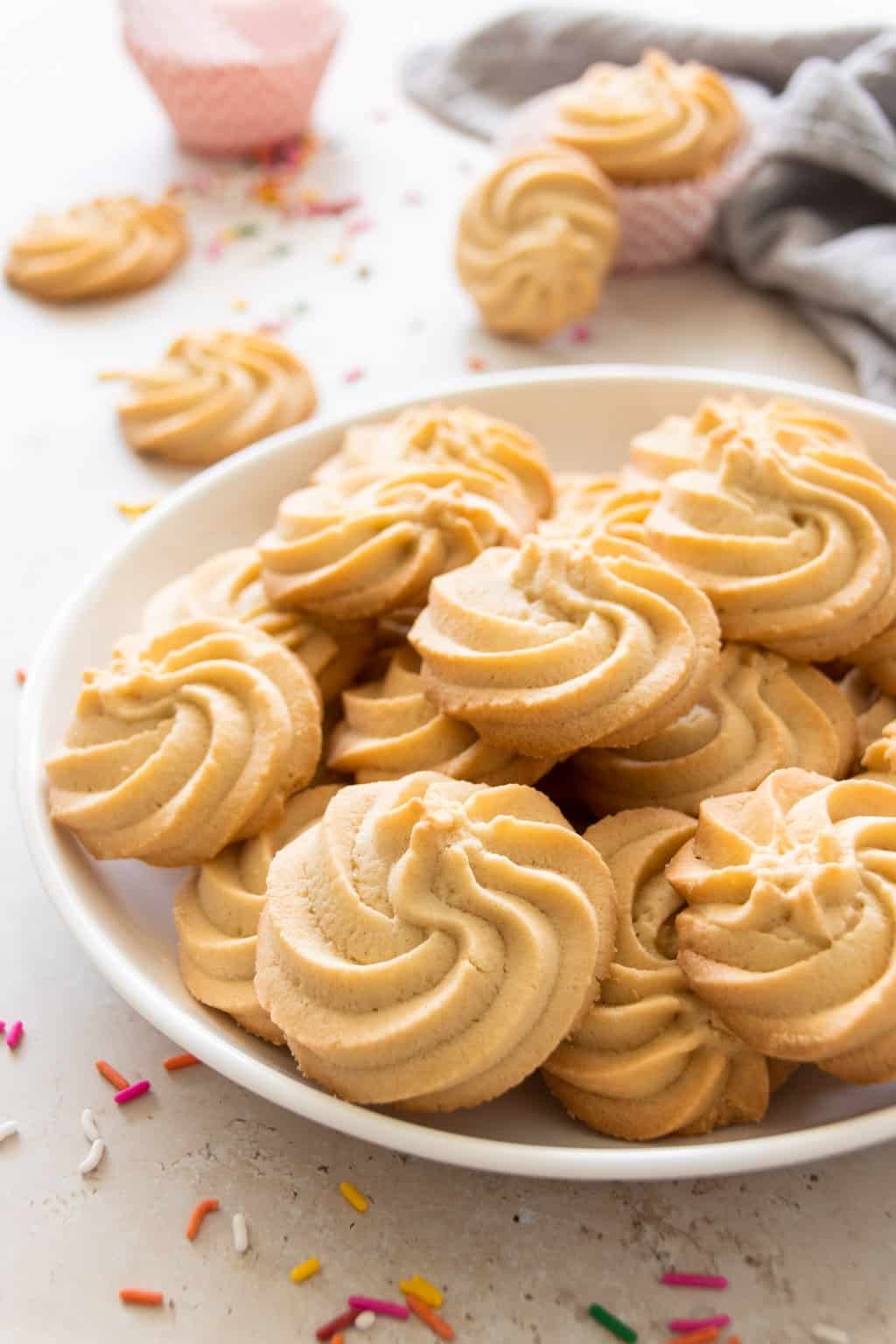

Homemade butter cookies are one of the easiest and most delicious treats you can prepare in your own kitchen. They have a rich buttery flavor, a delicate sweetness, and a tender texture that makes them perfect for afternoon tea, coffee breaks, family gatherings, and homemade gifts. The best part is that you can make them with just five basic ingredients.
This homemade butter cookies recipe with just 5 ingredients is ideal for beginners who want to bake something delicious without purchasing expensive ingredients or using complicated equipment. You do not need a stand mixer, special cookie cutters, or professional baking skills. A mixing bowl, a spoon, and a baking tray are enough to get started.
Unlike recipes that require several flavorings, fillings, and decorations, these simple butter cookies focus on the natural taste of butter, sugar, and flour. The result is a classic homemade cookie that pairs beautifully with tea, coffee, milk, and other favorite drinks.
In this detailed guide, you will learn how to make butter cookies from scratch, measure the ingredients correctly, prepare the dough, shape the cookies, bake them evenly, avoid common mistakes, and store them to maintain their freshness. You will also discover useful variations, ingredient substitutions, serving ideas, and answers to frequently asked questions.
Quick Recipe Overview
- Recipe name: Homemade Butter Cookies With Just 5 Ingredients
- Preparation time: 15 minutes
- Baking time: 10–14 minutes per batch
- Total time: Approximately 30–40 minutes, including cooling
- Difficulty level: Easy
- Yield: Approximately 20–24 small cookies
- Main flavor: Rich, sweet butter
- Texture: Tender, delicate, and lightly crisp around the edges
- Equipment required: Mixing bowl, spoon or mixer, measuring tools, baking tray, and parchment paper
- Best occasions: Tea time, snacks, parties, holidays, and homemade gifts
These cookies are especially useful when you want a simple dessert that can be made with ingredients you may already have at home.
Why You Will Love This Five-Ingredient Butter Cookie Recipe
There are many reasons to make butter cookies at home. Their simple ingredients, easy preparation, and versatile flavor make them suitable for both new and experienced bakers.
1. Only Five Basic Ingredients
You do not need a long shopping list to prepare these cookies. The recipe uses butter, sugar, flour, vanilla extract, and a small amount of salt.
These ingredients work together to create a traditional butter cookie with a balanced flavor and satisfying texture.
2. Easy for Beginner Bakers
This recipe does not require complicated techniques. You simply mix the butter and sugar, incorporate the remaining ingredients, shape the dough, and bake.
If you have never baked cookies before, this is an excellent recipe to practice measuring, mixing, portioning, and judging when baked goods are ready.
3. Rich Homemade Butter Flavor
Butter is the star ingredient. It gives the cookies their characteristic aroma and rich taste.
For the best results, use real dairy butter with a flavor you enjoy. Since the recipe contains so few ingredients, the quality of the butter makes a noticeable difference.
4. No Expensive Equipment Needed
You can prepare the dough by hand with a wooden spoon or sturdy spatula. An electric mixer can make the process quicker, but it is not essential.
This makes the recipe convenient for small kitchens, students, and home bakers who prefer simple equipment.
5. Perfect With Tea and Coffee
Butter cookies have a mild sweetness that complements hot drinks. They are delicious with black tea, green tea, coffee, cappuccino, or a glass of milk.
You can also serve them on a dessert platter alongside fruit, chocolate, or other homemade treats.
6. Easy to Customize
Once you have mastered the basic recipe, you can add lemon zest, cinnamon, chocolate chips, or a chocolate coating.
These variations allow you to create different flavors without changing the basic preparation method too much.
Ingredients for Homemade Butter Cookies With Just 5 Ingredients
The following quantities make approximately 20–24 small cookies, depending on how much dough you use for each one.
| Ingredient | Amount | Purpose |
|---|---|---|
| Unsalted butter | ½ cup (113 g), softened | Provides richness, flavor, and tenderness |
| Powdered sugar | ½ cup (60 g) | Adds sweetness and a fine texture |
| All-purpose flour | 1¼ cups (155–160 g) | Gives the cookies structure |
| Vanilla extract | 1 teaspoon | Adds a pleasant vanilla aroma |
| Fine salt | ⅛ teaspoon | Balances the sweetness |
Important: Use these five ingredients as the basic recipe. Baking powder, eggs, milk, and baking soda are not required.
Powdered sugar is a particularly useful choice because its fine texture helps produce delicate cookies. If you use granulated sugar instead, the finished texture may be slightly different.
Understanding the Role of Each Ingredient
Butter
Butter provides most of the flavor and contributes to the cookies’ tender, delicate texture.
Use unsalted butter so that you can control the amount of salt in the recipe. Let the butter soften at room temperature until it yields to gentle pressure but does not look melted or oily.
If the butter is too cold, it may be difficult to combine with the sugar. If it is melted, the dough may become too loose and the cookies may spread excessively.
Powdered Sugar
Powdered sugar blends easily with softened butter and creates a fine, delicate texture.
It is also known as icing sugar or confectioners’ sugar. Depending on the brand, it may contain a small amount of starch to prevent clumping.
Measure the powdered sugar carefully rather than adding extra simply because the dough does not taste very sweet.
All-Purpose Flour
Flour provides the structure that allows the cookies to hold their shape.
For the most consistent results, measure flour by weight. If using measuring cups, spoon the flour into the cup and level the top instead of pressing it down.
Too much flour can make the cookies dry, crumbly, and difficult to shape.
Vanilla Extract
Vanilla adds warmth and depth to the buttery flavor.
Pure vanilla extract works well, but a good-quality vanilla flavoring can also be used. If you prefer a completely plain butter cookie, you can omit the vanilla, although the recipe will then contain four ingredients.
Salt
A small amount of salt balances the sweetness and makes the butter flavor more noticeable.
If you only have salted butter, omit the additional salt or adjust it according to your taste.
Equipment Needed
You can make these cookies with basic kitchen tools.
- One large mixing bowl.
- A wooden spoon, spatula, or electric hand mixer.
- Measuring cups and spoons or a kitchen scale.
- A baking tray.
- Parchment paper.
- A spoon or cookie scoop.
- A cooling rack, if available.
If you want to create decorative shapes, you can also use a piping bag or cookie cutters. These are optional and are not necessary for the basic recipe.
Step-by-Step Instructions for Homemade Butter Cookies
Follow these instructions carefully to make cookies that are buttery, tender, and evenly baked.
Step 1: Preheat the Oven
Preheat your oven to 350°F (175°C).
Allow the oven to reach the correct temperature before putting the cookies inside. An oven that is not fully heated can affect spreading and baking time.
Line a baking tray with parchment paper. This helps prevent sticking and makes it easier to remove the cookies without breaking them.
If you do not have parchment paper, use a clean baking tray suitable for cookies. Grease it lightly only if necessary.
Step 2: Soften the Butter
Place ½ cup (113 g) of unsalted butter in a large mixing bowl.
The butter should be soft enough to press with a spoon but still firm enough to hold its shape.
If the butter is very cold, cut it into small pieces and allow it to soften at room temperature.
Avoid melting it in the microwave until liquid. Melted butter can change the dough’s consistency and produce cookies that spread more than expected.
Step 3: Mix the Butter and Powdered Sugar
Add ½ cup (60 g) of powdered sugar to the softened butter.
Mix with a wooden spoon or electric mixer until the mixture looks smooth, creamy, and evenly combined.
With an electric mixer, this may take approximately 2–3 minutes. Mixing by hand may take a little longer.
Scrape down the sides of the bowl so that the butter and sugar combine properly.
You do not need to whip the mixture excessively. The goal is to create a uniform base rather than a very airy mixture.
Step 4: Add the Vanilla Extract and Salt
Add 1 teaspoon of vanilla extract and ⅛ teaspoon of fine salt.
Mix until both ingredients are distributed throughout the butter mixture.
The vanilla should give the mixture a pleasant aroma, while the salt helps balance the sweetness.
If you are using salted butter, you can omit the additional salt.
Step 5: Add the Flour Gradually
Add the all-purpose flour in two or three portions.
Stir gently after each addition until the flour is incorporated. Continue until the dough begins to come together.
The dough should be soft and manageable rather than wet like cake batter.
Because this recipe contains no egg or added liquid, the dough may initially look crumbly. Continue mixing gently and press the mixture together with the spoon or your hands.
If it remains extremely dry and will not hold together, first check whether the butter was properly softened and whether the flour was measured correctly. Avoid immediately adding milk or water, because doing so changes the five-ingredient recipe and can alter the final texture.
Step 6: Shape the Dough
Take a small portion of dough and roll it gently between your palms to form a ball.
Use approximately 1 tablespoon of dough per cookie. Arrange the balls on the prepared baking tray, leaving about 1½–2 inches between them.
For a simple decorative finish, press each ball gently with a fork to create a pattern.
You can also flatten each ball slightly with your fingertips or the bottom of a clean glass.
Try to make all the cookies approximately the same size. This helps them bake evenly and prevents smaller cookies from becoming overbaked while larger ones remain underdone.
Step 7: Prepare Decorative Shapes (Optional)
If you prefer traditional shaped butter cookies, you can use a piping bag or cookie cutters.
For piped cookies, the dough needs to be soft enough to pass through the piping nozzle. A sturdy piping bag and a large star-shaped nozzle can create attractive ridged designs.
If the dough is too firm to pipe, check that the butter has not become too cold. Allow the dough to soften slightly at room temperature.
For cut-out cookies, this simple dough may need additional handling care because it is designed primarily for small, hand-shaped cookies. If you want sharply defined, intricate shapes, a butter cookie recipe specifically developed for cut-outs may be more suitable.
Step 8: Bake the Cookies
Place the baking tray on the center rack of the preheated oven.
Bake for approximately 10–14 minutes, depending on cookie size and thickness.
Watch the cookies closely near the end of the baking time. The edges should be set and may turn a very light golden color, while the tops should remain relatively pale.
Butter cookies generally do not need to become deeply brown to be fully baked. Overbaking can make them dry and overly crisp.
If your cookies are small and thin, they may finish earlier. Larger or thicker cookies may require more time.
Step 9: Allow the Cookies to Cool
Remove the tray from the oven and let the cookies rest for about 5–10 minutes.
Freshly baked butter cookies are delicate and may break if moved immediately.
Once they have firmed up, transfer them to a cooling rack or cool plate.
Let them cool completely before storing them in an airtight container.
Step 10: Serve and Enjoy
Arrange the cookies on a serving plate and enjoy them with tea, coffee, milk, or your favorite hot drink.
Their simple buttery flavor also makes them suitable for dessert platters, homemade gift boxes, and family celebrations.
For an elegant finish, dust the cooled cookies very lightly with powdered sugar. This is optional and will add extra sugar beyond the five ingredients used in the basic recipe.
Tips for Making Perfect Butter Cookies Every Time
A simple recipe can produce excellent results when you pay attention to a few important details.
1. Use Good-Quality Butter
Butter contributes significantly to the flavor of these cookies. Choose a butter you enjoy eating on its own.
Different brands have slightly different fat and water contents, which can affect the dough’s consistency.
2. Measure Flour Accurately
Excess flour is one of the most common causes of dry, crumbly butter cookies.
A kitchen scale is the most reliable way to measure the flour. If using cups, avoid packing the flour into the measuring cup.
3. Avoid Overmixing
Once the flour has been added, mix only until the dough comes together.
Excessive mixing can develop gluten and make the cookies less tender.
4. Use Softened, Not Melted, Butter
Softened butter is easier to mix and helps create a dough with the right consistency.
If the butter becomes greasy or liquid, the cookies may spread too much during baking.
5. Make Uniform Cookies
Use a measuring spoon or cookie scoop to portion the dough.
Uniform cookies bake at a similar rate, making it easier to achieve a consistent texture across the entire batch.
6. Watch the Edges
Butter cookies can become dry if they remain in the oven too long.
Remove them when the edges are set and only lightly colored. They will become firmer as they cool.
7. Cool Before Storing
Warm cookies release steam. If you put them into a sealed container too soon, moisture can collect inside and change their texture.
Let them cool completely before packing them away.
Why Are My Butter Cookies Crumbly?
Butter cookie dough can be naturally more delicate than dough containing eggs or other binding ingredients. However, it should still hold together when pressed.
If your dough falls apart excessively, check the following:
- Too much flour: Recheck the measurements and make sure the flour was not packed into the measuring cup.
- Butter too cold: Cold butter may not bind the dry ingredients effectively.
- Insufficient mixing: The dough may need a little more gentle mixing and pressing to come together.
- Incorrect ingredient proportions: Using a different sugar or flour quantity can change the texture.
Before changing the recipe, press a small amount of dough between your fingers. If it holds together, it is generally ready to shape.
If it remains completely powdery, check your measurements first rather than automatically adding extra liquid.
Easy Variations of Five-Ingredient Butter Cookies
Once you have mastered the original recipe, you can experiment with different flavors. The following variations add optional ingredients, so the finished versions will contain more than five ingredients.
1. Lemon Butter Cookies
Add 1–2 teaspoons of finely grated lemon zest to the butter and sugar mixture.
Lemon zest gives the cookies a refreshing aroma without introducing much additional moisture.
These cookies are excellent for spring gatherings, afternoon tea, and anyone who prefers a bright citrus flavor.
2. Chocolate-Dipped Butter Cookies
Prepare and bake the cookies according to the basic recipe.
Once they have cooled completely, dip half of each cookie into melted chocolate. Place them on parchment paper and allow the chocolate to set.
Dark chocolate creates a rich contrast with the buttery flavor, while milk chocolate produces a sweeter finish.
If you want to add toppings, sprinkle finely chopped nuts or decorative sprinkles over the chocolate before it hardens.
3. Cinnamon Butter Cookies
Add approximately ½ teaspoon of ground cinnamon to the flour.
Cinnamon gives the cookies a warm, aromatic flavor that pairs well with tea and coffee.
For a stronger cinnamon taste, you can lightly dust the finished cookies with a cinnamon-sugar mixture.
4. Chocolate Chip Butter Cookies
Fold approximately ⅓–½ cup of mini chocolate chips into the finished dough.
Mini chips work well because they distribute more evenly through small cookies.
The extra chocolate adds sweetness and creates a slightly different texture. Avoid adding so many chips that the dough becomes difficult to shape.
5. Almond Butter Cookies
Replace the vanilla extract with a small amount of almond extract, starting with approximately ¼ teaspoon.
Almond extract is more concentrated than vanilla, so a little goes a long way.
You can also press a sliced almond onto each cookie before baking for an attractive finish.
6. Coconut Butter Cookies
Add approximately ¼ cup of finely shredded desiccated coconut to the dough.
Coconut introduces a mild tropical flavor and a slightly different texture.
Because it absorbs some moisture, the dough may feel a little drier. Use finely shredded coconut and mix gently.
7. Orange Butter Cookies
Add 1–2 teaspoons of finely grated orange zest to the butter mixture.
Orange complements the natural flavor of butter and creates a fragrant cookie that pairs well with tea.
For an extra-special version, dip the cooled cookies in melted dark chocolate.
8. Jam Thumbprint Butter Cookies
Roll the dough into small balls and press a shallow indentation into the center of each one.
Fill each indentation with a small amount of thick jam before baking, provided the jam is suitable for baking.
The filling adds moisture and sweetness, so the texture and baking time may differ slightly from the plain cookies.
Ingredient Substitutions
If you do not have every ingredient available, certain alternatives may work. However, substitutions can change the flavor and texture.
| Original ingredient | Possible substitute | Expected result |
|---|---|---|
| Unsalted butter | Salted butter | Similar flavor and texture; omit added salt |
| Powdered sugar | Finely ground sugar suitable for baking | Texture may be slightly different |
| All-purpose flour | A one-to-one gluten-free baking blend | May be more delicate or crumbly |
| Vanilla extract | Almond extract in a smaller amount | Different but pleasant flavor |
| Dairy butter | Baking-quality plant-based butter | Results vary by fat and water content |
Can You Use Margarine Instead of Butter?
Some baking margarines can be used, but the results depend on their composition.
A firm baking margarine is more suitable than a soft spread intended for bread. Spreads with high water content may produce a different dough consistency and cookie texture.
For the richest traditional butter flavor, real butter remains the preferred option.
Can You Make These Cookies Gluten-Free?
Yes, you can experiment with a one-to-one gluten-free flour blend designed for baking.
Different blends absorb moisture differently, so the dough may be more fragile or require adjustments recommended by the manufacturer.
If baking for someone with celiac disease, check ingredient labels and prevent cross-contact with gluten-containing ingredients and equipment.
Can You Reduce the Sugar?
Reducing sugar may make the cookies less sweet, but sugar also affects their texture and structure.
Start with a small reduction and expect the finished cookies to differ slightly from the original recipe. Do not remove a large amount of sugar without testing the dough.
How to Store Homemade Butter Cookies
Proper storage helps preserve the cookies’ flavor and texture.
Storing at Room Temperature
Allow the cookies to cool completely, then place them in an airtight container.
Store the container in a cool, dry place away from direct sunlight and heat. For best quality, enjoy the cookies within approximately 5–7 days.
Humidity can soften crisp edges, while exposure to air can make the cookies stale.
Can You Refrigerate Butter Cookies?
Plain butter cookies generally do not need refrigeration.
Refrigeration may make the cookies firmer and can introduce unwanted moisture if they are not stored properly.
If you add a perishable filling or topping, follow the food-safety requirements for that ingredient.
How to Freeze Baked Butter Cookies
You can freeze baked butter cookies for convenient future serving.
- Allow the cookies to cool completely.
- Place them in a freezer-safe airtight container.
- Separate layers with parchment paper.
- Seal the container and label it with the date.
- Freeze for approximately 2–3 months for good quality.
Thaw the cookies in their container at room temperature to help prevent condensation from forming directly on their surfaces.
Can You Freeze Butter Cookie Dough?
Yes. Shape the dough into portions, arrange them on a tray, and freeze until firm.
Transfer the portions to a sealed freezer-safe bag or container.
When ready to bake, follow the original temperature instructions and check the cookies carefully. Frozen dough may require additional baking time.
If you plan to pipe decorative cookies, it is often easier to pipe them before freezing rather than trying to pipe firm frozen dough.
Serving Ideas for Homemade Butter Cookies
Butter cookies are versatile and can be served in several simple ways.
With Tea or Coffee
Arrange the cookies on a small plate and serve them with black tea, green tea, espresso, or cappuccino. Their buttery flavor complements both strong and mild drinks.
With Milk
Serve a few cookies with cold milk for a classic afternoon snack.
As a Dessert Platter
Combine butter cookies with fresh berries, sliced fruit, chocolate squares, or other small baked treats to create a varied dessert platter.
As Homemade Gifts
Pack completely cooled cookies in a food-safe tin or box lined with parchment paper.
Decorate the package with a ribbon and a simple label listing the ingredients, especially if you are giving the cookies to someone who may have food allergies.
For Parties and Celebrations
Use different shapes and optional decorations to create a coordinated cookie platter for birthdays, family gatherings, holidays, and special events.
Common Butter Cookie Baking Problems and Solutions
| Problem | Likely cause | Solution |
|---|---|---|
| Dough will not hold together | Too much flour or butter too cold | Recheck measurements and soften the butter properly |
| Cookies spread excessively | Butter too warm or dough too soft | Use softened butter and a cool tray |
| Cookies are too hard | Overbaking or excessive flour | Check the oven earlier and measure accurately |
| Cookies are pale and soft after baking | They may need a little more time | Check the edges and bake briefly longer if necessary |
| Cookies break when lifted | They are still hot | Allow them to rest on the tray |
| Cookies have uneven shapes | Inconsistent dough portions | Use a measuring spoon or cookie scoop |
| Cookies taste too salty | Salted butter plus added salt | Use unsalted butter or omit the extra salt |
Nutrition Information
The following nutrition information is an estimate and will vary according to ingredient brands and cookie size.
| Nutrient | Approximate amount per cookie |
|---|---|
| Calories | 80–100 |
| Carbohydrates | 8–11 g |
| Fat | 5–6 g |
| Protein | 1 g |
| Sugar | 3–5 g |
Estimate assumes approximately 22 small cookies made from the listed ingredients.
Butter cookies are a sweet treat rather than a complete meal. Enjoy them in portions that suit your dietary needs.
Frequently Asked Questions
1. What are the five ingredients in homemade butter cookies?
The five ingredients are unsalted butter, powdered sugar, all-purpose flour, vanilla extract, and fine salt. Together, they create a simple cookie with a rich buttery flavor and delicate texture.
2. Can I make butter cookies without an electric mixer?
Yes. A wooden spoon or sturdy spatula works well. Make sure the butter is softened so that you can combine it with the sugar without excessive effort.
3. Do butter cookies need eggs?
No. This particular five-ingredient recipe does not use eggs. The butter helps bind the dough when it is mixed and pressed together correctly.
4. Why is my butter cookie dough too dry?
The most common reason is excess flour. Butter that is too cold or ingredients measured incorrectly can also prevent the dough from coming together.
Check the quantities first, then gently mix and press the dough to see whether it holds together.
5. How long should butter cookies bake?
Bake them at 350°F (175°C) for approximately 10–14 minutes. Smaller cookies may finish sooner, so check the edges carefully near the end of baking.
6. Should butter cookies be soft or crispy?
They can have different textures depending on the recipe. These cookies are designed to be tender and delicate, with lightly crisp edges. Longer baking generally produces a drier, crisper result.
7. Can I use granulated sugar instead of powdered sugar?
You can experiment with granulated sugar, but the texture may change. Powdered sugar blends more smoothly into the butter and is particularly suitable for delicate butter cookies.
8. How can I make my butter cookies more flavorful?
Use good-quality butter and vanilla extract. You can also experiment with lemon zest, cinnamon, almond extract, or orange zest to create additional flavors.
9. Can I make butter cookies without vanilla?
Yes. Vanilla is included for flavor, not structure. Omitting it leaves you with a four-ingredient recipe with a simpler buttery taste.
10. Why did my butter cookies turn brown underneath?
Your baking tray may be too dark, the oven may be too hot, or the cookies may have baked too long.
Try a light-colored tray, check the oven temperature, and begin checking the cookies earlier.
11. Can I decorate butter cookies with icing?
Yes. Let the cookies cool completely before applying icing or melted chocolate. Allow the decoration to set before stacking or packaging them.
12. Are homemade butter cookies suitable for gifting?
Yes. They make excellent homemade gifts because they use simple ingredients and can be packed neatly in tins or food-safe boxes. Include an ingredient label when sharing them with others.
13. How do I keep butter cookies from becoming stale?
Store them in an airtight container after they have cooled completely. Keep them away from humidity, direct sunlight, and heat.
14. Can I make butter cookies in an air fryer?
You can adapt the recipe for an air fryer, but the temperature and timing may differ substantially by model. Bake a small test batch, use an appropriate heat-safe tray or liner, and monitor the cookies closely.
15. What is the difference between butter cookies and shortbread?
Both contain butter, flour, and sugar, but their proportions and preparation methods can differ. Shortbread traditionally has a simple, rich, crumbly structure, while butter cookies may be slightly sweeter and are often shaped or piped into decorative designs.
Final Thoughts
Homemade butter cookies with just five ingredients are an excellent choice for anyone who wants an easy, affordable, and delicious baking recipe. With butter, powdered sugar, flour, vanilla extract, and salt, you can create tender cookies with a classic flavor and a delicate texture.
The key to success is using properly softened butter, measuring the flour accurately, mixing the dough gently, shaping the cookies evenly, and removing them from the oven before they become too brown.
Once you master the basic recipe, you can experiment with lemon, cinnamon, chocolate, coconut, and other flavors to suit your preferences. Serve the cookies with tea or coffee, share them with family and friends, or package them as thoughtful homemade gifts.
Try this easy five-ingredient butter cookie recipe whenever you want a simple homemade dessert without a complicated ingredient list.